How Do Volcanic Eruptions Affect Wildlife and Ecosystems? Here’s an Explanation from an IPB University Expert
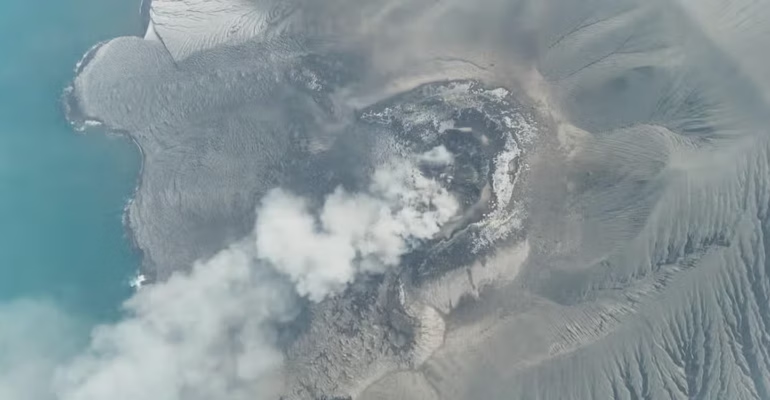
Volcanic eruptions not only threaten human safety but can also disrupt the survival of wildlife and the balance of ecosystems.
Hot lahars, volcanic ash, and the destruction of food and water sources are among the impacts that can lead to a decline in wildlife populations, especially in conservation areas located near volcanoes.
Dr Abdul Haris Mustari, a wildlife expert and lecturer in the Department of Forest Resource Conservation and Ecotourism at IPB University, explains that eruptions are an unavoidable natural phenomenon that directly impact various components of the ecosystem.
“When an eruption occurs, many animals die from direct exposure to hot lava and volcanic ash, causing a significant decline in population,” said Dr Mustari.
According to him, the effects of eruptions can also extend to conservation areas that serve as habitat pockets for various species of wildlife.
Some areas at risk of being affected include Ujung Kulon National Park, Mount Krakatau Nature Reserve, South Bukit Barisan National Park, Way Kambas National Park, as well as several forest conservation areas in East Nusa Tenggara and Kalimantan.
In addition to direct mortality, volcanic ash can cover grass, leaves, and fruits that serve as food sources for wildlife. Similar conditions occur in water sources such as rivers, lakes, swamps, and springs, which can become contaminated with volcanic ash. As a result, herbivores, carnivores, omnivores, and even insects face ecological stress.
Endangered and protected species such as the banteng, Javan rhinoceros, Sumatran rhinoceros, tapir, Sumatran tiger, leopard, Javan gibbon, and Javan langur are among those that may be affected.
A decline in herbivore populations also has the potential to affect carnivores due to a reduction in food sources such as deer, muntjacs, sambar deer, and wild boars.
Dr Mustari cited the example of the extinction of the banteng from the Pananjung Pangandaran Nature Reserve, which was partly triggered by the 1982 eruption of Mount Galunggung that buried the grasslands serving as the banteng’s food source.
Nevertheless, some animals can still save themselves by migrating to safer habitats.
Therefore, undamaged forest areas need to be preserved as temporary habitats. Ecological corridors particularly riparian forests and areas around water sources are also crucial for supporting wildlife migration.
“Communities need to be vigilant about the possibility of wildlife leaving forest areas and entering settlements, which can trigger human wildlife conflicts,” he explained.
He added that ecosystem recovery occurs gradually. Wildlife begins to return as moss, grass, and shrubs grow, eventually forming a secondary forest.
This process can take about 25–30 years to support a more diverse wildlife community. (dr) (IAAS/SSR).