Is It True That Gray Hair Is a Sign the Body Is Fighting Cancer? Here’s an Explanation from an IPB University Expert
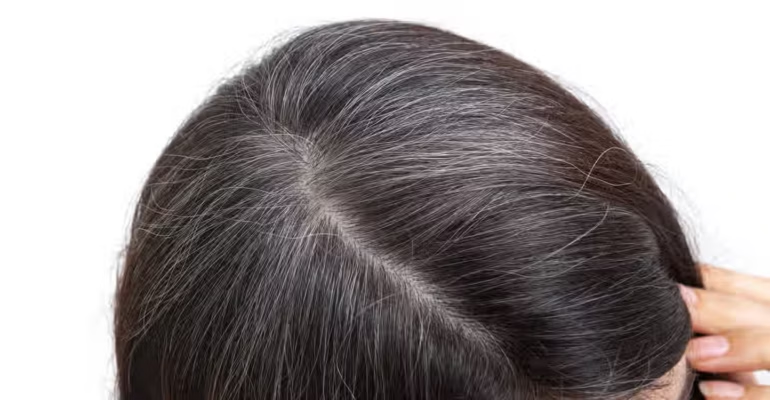
Gray hair may be a familiar sight to anyone entering adulthood. Recently, a widely circulated belief suggests that gray hair is actually linked to the body’s mechanism for fighting cancer. Is this true?
According to dr Yenny Rachmawati, MBiomed, a lecturer at the Faculty of Medicine and Nutrition (FKGiz) at IPB University, this belief is inaccurate. The appearance of gray hair does not mean the immune system is working to protect the body from cancer.
“Gray hair does not mean the body is actively fighting cancer. Hair color cannot be used as a marker to estimate a person’s cancer risk,” said dr Yenny.
This conclusion emerged after a 2025 study found a link between DNA damage and two possible outcomes: hair turning white or the formation of lesions that could lead to melanoma, a form of skin cancer.
“Hair color is produced by melanocytes, which generate the pigment melanin. These cells originate from melanocyte stem cells stored in hair follicles.
As we age, some of these stem cells may decrease in number, lose their function, or no longer be in the right location. As a result, the hair that grows lacks pigment, making it appear white or gray,” explained dr Yenny.
Experimental research on mice shows that when melanocyte stem cells experience DNA damage, the cells can take different pathways. Some undergo cellular aging, which leads to hair graying.
However, under certain conditions, particularly when exposed to carcinogenic substances, the cells can survive and potentially develop into melanocytic lesions that lead to melanoma.
Nevertheless, dr Yenny emphasizes that there is not yet sufficient epidemiological evidence to suggest that people who go gray early have a lower risk of melanoma or other cancers. Therefore, going gray early does not mean a person is better protected, just as not yet having gray hair does not automatically indicate a higher risk of cancer.
Factors Triggering Gray Hair
According to dr Yenny, the rate at which gray hair appears is influenced by various factors. Age and genetics are the primary factors, while oxidative stress, smoking, pollution, and exposure to certain environmental factors may also play a role. Severe psychological stress is thought to accelerate the depletion of melanocyte stem cells through activation of the sympathetic nervous system.
In addition, premature graying may be associated with vitamin B12 or iron deficiency, thyroid disorders, or certain autoimmune diseases. However, gray hair does not always indicate a nutritional deficiency or a specific disease.
“Therefore, we shouldn’t link the appearance of gray hair to the body’s ability to prevent cancer. This correct understanding is important so that we don’t overlook cancer risk factors simply because our hair is starting to turn gray,” said dr Yenny.
On the contrary, she continued, changes in the skin, especially moles that change in shape, color, or size, or that cause symptoms should be noted and discussed with a healthcare professional.
A medical examination may also be considered if gray hair appears very early and is accompanied by other symptoms, so that potential nutritional factors or health issues can be assessed based on the individual’s condition.
“Cancer prevention remains essential regardless of hair color, including maintaining a healthy lifestyle, avoiding smoking, protecting the skin from excessive UV exposure, and paying attention to changes in moles or suspicious skin lesions,” she concluded. (dr) (IAAS/LAN)