Camel Mortality Rates Soar Due to Rising Global Temperatures, IPB University Professor: A Sign of the Climate Crisis
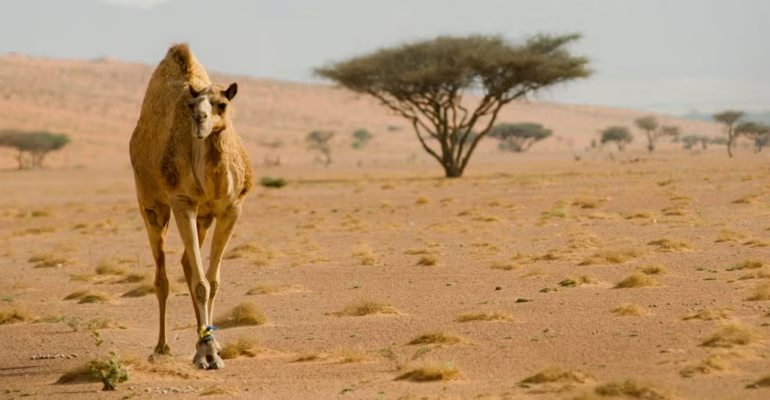
Over the past decade, temperatures in the desert have frequently reached 50–55°C. Camels, animals known for their exceptional heat tolerance, are now facing high mortality rates as extreme temperatures rise.
IPB University Professor of Ecological Genetics Ronny R. Noor noted that in recent years, extreme desert temperatures have caused camels to suffer from blisters, dehydration, kidney failure, and even death.
In Somalia, research indicates that approximately 73 percent of camels have died in the Sool region. Meanwhile, in Kenya, there has been a 15 percent increase in mortality over the past two years due to hyperthermia.
“The phenomenon of rising extreme temperatures in the desert to the point where even camels cannot survive truly highlights the existence of a very serious climate crisis,” said Prof Ronny.
According to him, the high camel mortality rate is a clear sign that climate change has exceeded nature’s ability to adapt. “Therefore, we need to care and find solutions to protect these precious animals,” he urged.
The Camel’s Homeostasis Zone
Prof Ronny explained that camels have a physiological mechanism that allows their body temperature to fluctuate from around 34°C at night to 41°C during the day without having to sweat much. This mechanism helps them conserve water.
However, when the ambient temperature exceeds 45°C, this ability becomes less effective. Camels then sweat more, lose fluids, and experience heat stress.
“At extreme temperatures above 50°C, even healthy camels can develop severe hyperthermia within a few hours if they lack access to water or shelter. These conditions can also lead to kidney damage, metabolic disorders, and even organ failure,” said the professor from the Faculty of Animal Science at IPB University.
Prof Ronny explained that these extreme temperatures stem from global climate change driven by rising greenhouse gas emissions, which further exacerbate global warming. Extreme heat waves, such as daytime temperatures reaching 50–55°C render the camel’s body cooling mechanisms less effective.
Humans Are Also Affected
The heat stress is exacerbated by drought, which causes water sources to dry up and reduces desert vegetation. As a result, camels lose their sources of food and water, while communities lose vital resources such as milk, meat, and transportation.
“Unfortunately, land exploitation and desertification are further worsening these conditions, making everything even more difficult,” he added.
In Ethiopia, herders in the Afar region have even reported losing eight camel calves in a single month due to extreme temperatures. Such conditions demonstrate that climate change is not only altering environmental conditions but also threatening the livelihoods of desert communities and the cultures that have long regarded camels as a vital part of their identity.
“If camels as a symbol of the desert’s strength can no longer survive, desert communities such as the Badui in the Sahara and the Bedouin in the Middle East will undoubtedly face major challenges in sustaining their way of life.”
These changes may prompt communities to adapt through water management, the use of heat tolerant plants, and even migration to more favorable regions. At the same time, they face the challenge of preserving their traditions and cultural identity amid ecological changes.
According to Prof Ronny, this phenomenon serves as a reminder that climate change is not just a matter of rising temperatures, but also about the limits of living organism’s ability to adapt. When even creatures like camels begin to struggle to survive in their own habitats, the pressure on desert ecosystems and the communities that depend on them becomes increasingly evident. (*/Rz) (IAAS/KQA)