KreaWol: Himaproter’s PPK Ormawa Team’s Efforts to Empower Women in Hambaro Village Through Sheep Wool Innovation
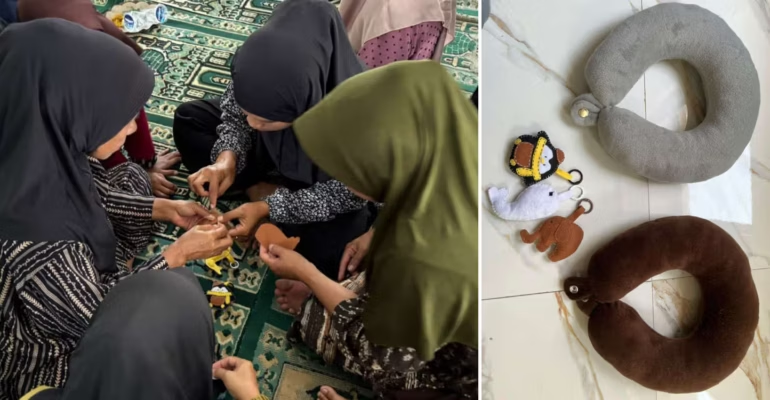
The Association of Animal Production and Technology Students (Himaproter) at IPB University, through the Student Organization Capacity Building Program (PPK Ormawa), organized ‘KreaWol’, an empowerment activity for women to process sheep’s wool into economically valuable products.
The program took place in Hambaro Village, Nanggung Subdistrict, Bogor Regency, West Java, and featured training in wool processing, a demonstration on making keychains filled with sheep’s wool, and the creation of planting media made from sheep’s wool combined with plant seeds.
“Through this activity, participants are expected to be able to utilize wool waste as a creative product while also opening up business opportunities based on local potential,” said Arsye Matullah Widianto, a student at the Faculty of Animal Science at IPB University and a member of the PPK Ormawa Himaproter team.
The series began with an introduction to the potential of sheep’s wool as a byproduct of livestock farming that has not yet been optimally utilized. In this session, participants gained an understanding of the characteristics of wool, simple processing methods, and opportunities for developing marketable creative products, specifically keychains.
The participants, young women and mothers from Hambaro Village took part in a demonstration on making keychains filled with sheep’s wool as an innovative alternative to Dacron. The team guided the participants through the entire process, from filling the keychains with wool and assembling the accessories to the finishing touches, resulting in attractive souvenirs ready for the market.
During this event, the team also collaborated with Himaproter’s “Livestock Product Processing (P3)” Division to introduce an innovative growing medium made from sheep’s wool combined with plant seeds.
This demonstration showed that sheep’s wool can be used as a growing medium capable of retaining moisture, thereby supporting seed growth while expanding the use of wool waste into environmentally friendly products.
“We hope that through KreaWol, the community will not only recognize sheep’s wool as livestock waste but also be able to process it into creative products with economic value,” said Prasetyo, Leader of Himaproter’s P3 Division.
Through KreaWol, the PPK Ormawa Himaproter team hopes that the skills acquired by participants will serve as a foundation for developing creative sheep’s wool-based products as new business opportunities in Hambaro Village. The utilization of wool, which previously had no economic value is expected to result in innovative products that support increased community income while reducing livestock byproducts.
Moving forward, KreaWol is expected to serve as a first step toward building a more self-reliant, creative, and empowered community through the sustainable optimization of local potential. (*/Rz) (IAAS/EPK)