Prof Julie Ekasari Proposes a “Nutritional Ecology” Solution for the Future of Indonesian Aquaculture
Indonesia is currently the world’s third largest aquaculture producer. This achievement underscores the vital role of the aquaculture sector in meeting the global population’s protein needs.
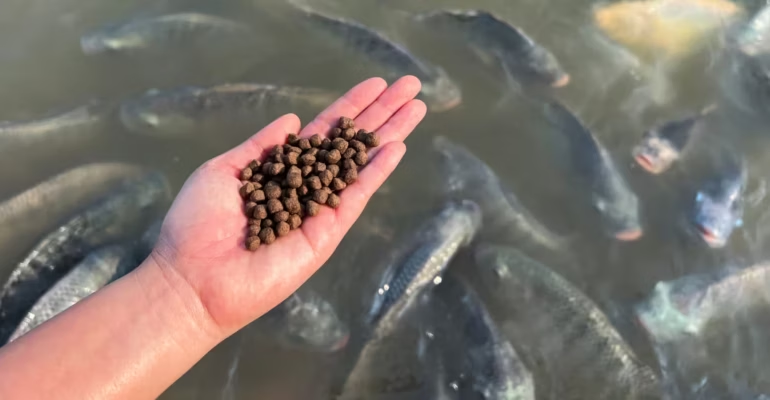
However, intensive aquaculture systems present significant challenges. Feed costs account for the largest expense and often generate waste that degrades water quality and increases the risk of disease in aquatic environments.
To address this, Prof Julie Ekasari, a full professor at the Faculty of Fisheries and Marine Sciences at IPB University, proposes the “Nutritional Ecology” concept to reduce feed nitrogen, only about 20–40 percent of which actually becomes harvested biomass.
“This concept views feed, farmed organisms, microbial communities, and the environment as a single integrated system that interacts through nutrient flows,” she said during a press conference ahead of the IPB University Full Professor Inaugural Lecture (7/23).
By understanding nutrient pathways, she continued, production efficiency can be improved while maintaining organism health and minimizing environmental impacts.
Prof Julie emphasized three crucial points in modern aquaculture management: First, aquaculture efficiency should not be measured solely by the feed conversion ratio (FCR), but also by the system’s ability to retain and recycle nutrients.
“The future of Indonesian aquaculture depends heavily on our ability to manage nutrient resources wisely to ensure sustainable food security,” she said.
Second, nutrient management has a direct impact on the microbiome and immune system of the product. Third, nutrient management is the cornerstone of the aquaculture sector’s future sustainability.
Addressing the issue of high energy consumption in technologies such as biofloc, Prof Julie explained that nutrient ecology systems can be optimized to be more cost effective. This can be achieved through precise fish stocking density management, the integration of sedimentation systems to control bacteria, and the utilization of future technologies such as solar-powered smart aeration systems and digital sensors to support more efficient aquaculture systems.
She has high hopes that this concept of nutritional ecology will not merely remain an academic idea but will transform into the foundation of national policy and environmentally friendly aquaculture practices. (dh) (IAAS/SSR).