Want to Start Living a Healthy Life? A Lecturer from IPB University Recommends Slow Jogging as a First Step
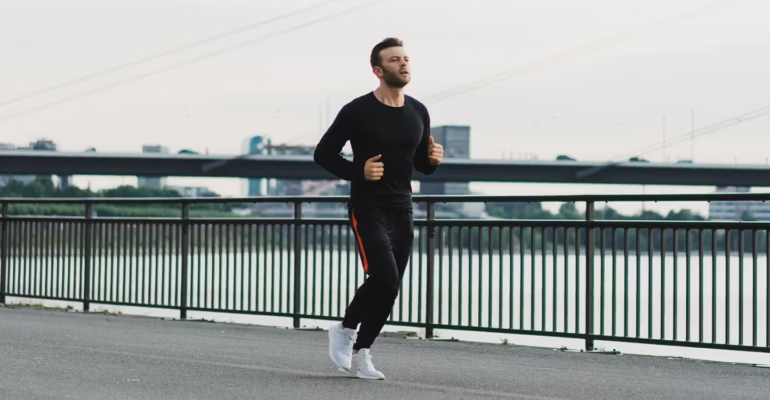
The slow jogging trend is gaining popularity as a simple and accessible exercise option for people of all ages.
Putri Utami, MBiomed, a lecturer at the Faculty of Medicine and Nutrition (FKGiz) at IPB University, explains that scientifically, slow jogging offers very promising health benefits, particularly in improving fitness, heart health, and metabolism without placing excessive physical strain on the body.
According to Putri, slow jogging is performed at a relaxed pace or niko-niko pace, which corresponds to an intensity of about 50 percent of maximum aerobic capacity, with a heart rate ranging from 110 to 140 beats per minute. This condition allows the body to operate within an optimal zone for improving cardiovascular function and metabolism.
“At that intensity, the body relies more on fat as an energy source than on muscle glycogen. In addition to helping reduce body fat, this exercise also stimulates the formation of new mitochondria and capillaries, which are key to improving long term endurance,” she said.
The Ideal Entry Point for Those Who Rarely Exercise
Although the calorie burn per minute is lower than that of conventional jogging, the resulting long term physiological benefits are very similar. Therefore, Putri notes that slow jogging can be an effective exercise option without forcing the body to work at high intensity.
“Slow jogging is an ideal entry point for people who haven’t exercised much,” she said.
Up until now, many people have failed to maintain an exercise routine because they immediately opt for high intensity activities. This carries the risk of injury or excessive fatigue.
“The slow jogging technique involves landing on the midfoot, not the heel. This method helps reduce the impact on the knees and hips, thereby lowering the risk of injury,” she explained.
She added that various studies have also shown that adherence rates for slow jogging are very high, even among older adults. In addition to improving fitness levels, this exercise has been proven to enhance mobility, making it suitable for individuals who previously led a sedentary lifestyle.
According to Putri, the success of an exercise is determined not only by its intensity but also by a person’s consistency in performing it.
Light to moderate intensity physical activity tends to be easier to maintain because it doesn’t cause excessive muscle soreness after exercise.
“The best exercise isn’t the most intense one, but the one you do most consistently. When your body isn’t experiencing soreness that interferes with daily activities, your motivation to exercise again will be much higher,” she said.
Good for Mental Health
In addition to the physical benefits, she noted that slow jogging also has a positive impact on mental health. Rhythmic, low intensity activities stimulate the release of endorphins, serotonin, and dopamine which hormones that improve mood without triggering excessive spikes in stress hormones.
Putri believes this approach is highly relevant as part of efforts to improve public fitness. In her view, an effective health intervention is one that is easy to do, safe, and carries a low risk of injury, so that more people can participate. (dr) (IAAS/KQA)