Making History, IPB University Becomes the First University to Release Captive Bred Timor Deer Into the Wild
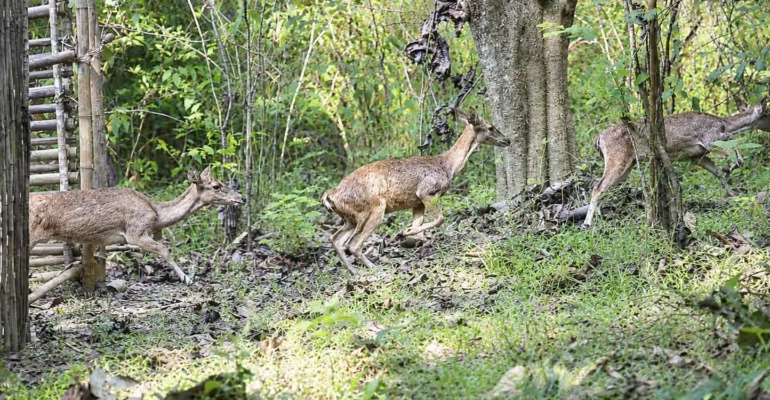
IPB University has once again shown its active role in protecting biodiversity by releasing 10 Timor deer (Rusa timorensis) into the Cikepuh Wildlife Reserve, Sukabumi Regency (7/14).
These ten timor deer were bred in captivity by the Department of Forest Resource Conservation and Ecotourism (KSHE), Faculty of Forestry and Environment (FAHUTAN) at IPB University, at the Campus Forest Park at IPB Dramaga.
This event marks the first deer release ever carried out directly by a higher education institution in Indonesia, as a real step in strengthening conservation moving from an ex situ approach to in situ.
Chairman of IPB University’s KSHE Department, Dr Nyoto Santoso, explained that this successful release is the result of long term collaboration between IPB University, the Faculty of Forestry and Environment, the West Java Natural Resources Conservation Center (BBKSDA), United Tractors, and the local government.
According to him, support from various parties made it possible to develop the breeding program, from improving the enclosures to raising the standard of animal care.
“This collaboration shows that conservation cannot be done alone. Working together between universities, government, businesses, and communities is key to bringing wildlife back to their natural habitat,” he said.
He added that this release does not only return deer to nature, but is also part of an effort to restore the population of animals that once lived in the Cikepuh area.
“IPB University will also keep monitoring through student research activities to make sure the deer population keeps growing well in its natural habitat,” he said.
Human Capital, Communications and Sustainability Director of United Tractors, Ari Sutrisno, said this release is part of the company’s commitment to carrying out environmental social responsibility programs through the UTrees program.
He hopes the released deer can breed successfully, helping to strengthen the ecological balance in the conservation area.
“This program is a form of moving together, or moving as one. We believe that collaboration between government, universities, industry, and the community will bring a bigger impact for environmental sustainability,” he said.
Meanwhile, Leader of the Region I Natural Resources Conservation Division at West Java’s BBKSDA, Wawan Sukawan, stressed that releasing animals is a strategic step in increasing wildlife populations through a restocking process.
He emphasized that successful conservation does not stop at release, but must be followed by habitat protection and ongoing monitoring.
“Nature is the best home for wildlife. Our shared duty is to make sure that habitat stays protected, so the released animals can live, breed, and once again become an important part of the ecosystem’s balance,” he said. (dr)(IAAS/ST)