IPB University Expert Outlines Strategy to Restore National Ginger Production
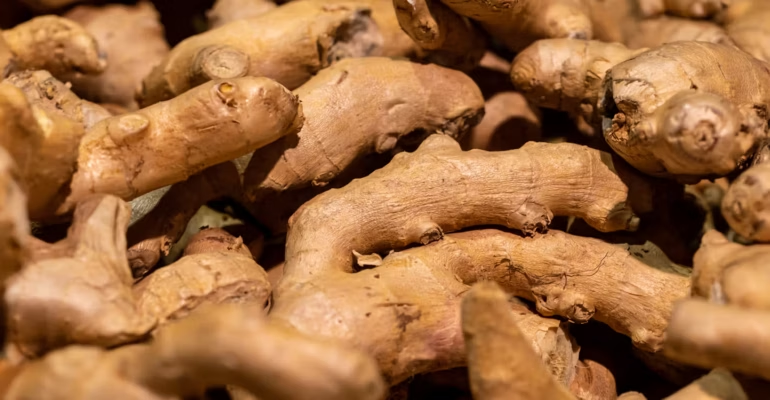
The decline in national ginger production in recent years signals the need for a comprehensive overhaul of the agribusiness sector. Data from the Central Statistics Agency (BPS) show that national ginger production fell from 190,26 thousand metric tons in 2024 to 168,97 thousand metric tons in 2025.
During the same period, the harvested area also shrank from 7,49 thousand hectares to 6,51 thousand hectares. This situation is considered to have the potential to affect supply stability and increase dependence on imports if not addressed promptly.
Dr Anisa Dwi Utami, a lecturer in the Department of Agribusiness at IPB University, explained that the decline in production reflects pressure on the supply side of the ginger market.
According to her, when production declines while demand remains high or even increases, consumer prices are likely to rise, and the need for imports will grow.
“Ginger is a strategic horticultural commodity that serves as a food staple, a spice, and a raw material for the traditional medicine and herbal beverage industries. Therefore, the decline in production requires collective attention,” she said.
Dr Anisa added that Indonesia’s significant ginger production potential does not automatically ensure sustainable market supply.
She explained that imports are still necessary due to a gap between production timing and year round market demand, differences in the quality required by the industry, as well as limitations in domestic productivity and supply continuity.
Furthermore, she noted that the main challenge facing ginger farmers today is not merely a matter of cultivation, but rather the continued dominance of small scale, scattered farming operations.
These conditions result in relatively high production costs, slow technology adoption, limited access to financing, and a weak bargaining position for farmers within the supply chain.
According to her, the most urgent policy is to encourage the transformation of ginger farming into a more organized system with sufficient economies of scale.
“Strengthening institutional frameworks through cooperatives, farmer groups, and partnerships with industry will make it easier for farmers to access high-quality seeds, technology, financing, and market certainty, thereby enabling sustainable production growth,” she explained.
She also emphasized that the priority step to reduce dependence on imports is not merely to restrict trade, but to build an efficient ginger agribusiness system capable of consistently meeting industrial demand.
The development of ginger production hubs, the strengthening of farmers’ economic institutions, and close partnerships with the processing industry are considered the main pillars for enhancing the competitiveness of the national ginger agribusiness while strengthening food security based on Indonesia’s spice commodities. (dr) (IAAS/WSG)