Declining Population, IPB University Professor: Buffalo Conservation Must Start with Culture
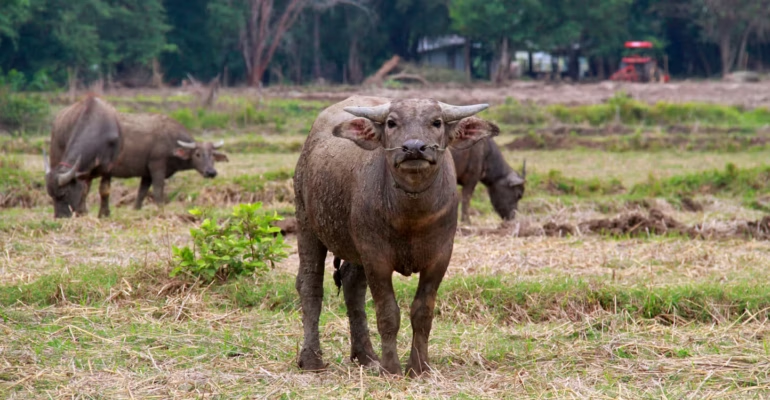
Amid agricultural modernization, buffalo in Indonesia are increasingly under threat. Yet these animals which for centuries have been farmers’ companions and an integral part of various traditions across the archipelago hold significant historical, cultural, and economic value.
IPB University Professor Ronny Rachman Noor believes that water buffalo conservation will be more effective if it is carried out by strengthening local culture and traditions.
According to Prof Ronny, the main factor causing the decline in the water buffalo population is the mechanization of agriculture, which has led to tractors replacing water buffalo as a source of labor. In addition, land use changes resulting from urbanization have reduced the rice paddies and swamps that serve as the buffalo’s habitat.
“Farmers feel that the younger generation’s interest in raising buffalo is declining because it is seen as less profitable. Conversely, government policies focus more on beef cattle and poultry, which may make the younger generation more interested due to the clearer potential for profit,” he said.
Therefore, he believes that revitalizing the culture and traditions associated with water buffalo is key to ensuring the sustainability of their population. These efforts need to be supported by artificial insemination and genetic breeding to improve the quality and genetic diversity of the population.
“We should strive to develop the economy by increasing the production of buffalo based products such as milk, meat, and crafts made from horns to enhance competitiveness. Within the community, it is important to introduce education from an early age through cultural festivals, local curricula, and engaging educational tours. We need to expand conservation areas so that the habitats of swamp buffalo in their endemic regions remain protected and sustainable,” said Prof Ronny.
He added that culture based conservation is more effective because communities have a strong emotional bond with water buffalo.
“Conserving buffalo through cultural channels fosters a closer connection due to this emotional bond. Water buffalo are not merely livestock, but also part of a shared identity. Traditional customs encourage communities to participate voluntarily, thereby strengthening a sense of togetherness. This culture builds commitment and reinforces community values. Buffalo rituals are culturally engaging and provide meaningful support to the local economy,” he explained.
Domestication and Cultural Heritage
Prof Ronny explained that buffalo (genus Bubalus) originated from Bovidae ancestors in Asia about 1–2 million years ago. Their domestication began about 5.000–6.000 years ago in South Asia, then spread to Southeast Asia including the Indonesian archipelago through trade routes and migration.
“Buffalo entered the Indonesian archipelago via trade routes from India and Indochina, and have been an integral part of life in Java, Sumatra, Sulawesi, and Kalimantan for centuries. Used as draft animals in rice fields, as status symbols, and as animals for ritual sacrifices, water buffalo are part of our history and culture,” he said.
According to Prof Ronny, before tractors were widely used, water buffalo were the backbone of agriculture. Various traditions such as bathing water buffalo before the planting season, the Rambu Solo ceremony in Tana Toraja, the Dayak people’s Kwangkey ritual, and the symbolic role of water buffalo in Minangkabau culture demonstrate that water buffalo hold significance far beyond their economic function.
In addition to facing a declining population, water buffalo are also vulnerable to various diseases, such as Septicaemia Epizootica, MCF, Surra, Fasciolosis, and Enterotoxemia. Swampy environmental conditions, the presence of insect vectors, and suboptimal pen management further increase the risk of disease.
“Buffalo are a valuable part of Indonesia’s cultural heritage that we have long held in high regard. Although their numbers have declined due to modernization and social change, preserving buffalo through traditions, rituals, and symbolic values is the best way to ensure they remain part of our national identity,” concluded Prof Ronny. (*/Rz) (IAAS/FHD)