IPB University Professor Highlights the Importance of Checking Probiotic Drink Labels to Reap Health Benefits
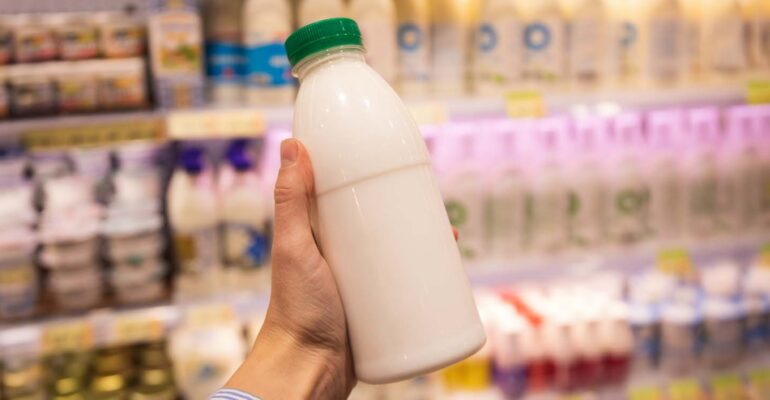
Probiotic drinks are often perceived as a healthy choice. However, Prof Lilis Nuraida of the Faculty of Agricultural Technology at IPB University emphasizes the need to carefully review the information on product labels, including sugar content, types of microorganisms, and the amount of probiotics present to ensure optimal health benefits.
She explains that probiotics are live microorganisms that provide health benefits when consumed in sufficient quantities, particularly for digestive health. Unlike nutrients, probiotics help maintain the balance of the gut microbiota.
“To perform their function as probiotics in the digestive tract, especially in the colon, probiotics do not require simple sugars. Simple sugars are absorbed by the small intestine, so probiotic foods do not actually need to contain sugar. Sugar is only used as a flavoring agent,” she said.
According to Prof Lilis, if a probiotic product contains high amounts of sugar, consumers should consider their total daily sugar intake to ensure it does not exceed recommended limits.
The Difference Between Probiotics and Prebiotics
Prof Lilis emphasized that probiotics and prebiotics are two distinct components. Probiotics are live microorganisms, while prebiotics are compounds that are not digested in the upper digestive tract and serve as a food source for beneficial microorganisms in the colon.
“Prebiotics are generally oligosaccharides such as fructooligosaccharide (FOS), galactooligosaccharide (GOS), and inulin. If a product contains both prebiotics and probiotics, it is called a synbiotic food or product,” she explained.
Oligosaccharides that act as prebiotics are dietary fibers. However, she added that not all dietary fibers can be categorized as prebiotics because only certain types of dietary fibers can be utilized by probiotic microorganisms.
Read Food Labels Carefully
In addition to understanding the difference between probiotics and prebiotics, Prof Lilis urged the public to read food labels before purchasing probiotic products. According to her, consumers need to pay attention to the type of microorganisms, the strains used, and the number of live cells listed on the packaging in accordance with the regulations of the Indonesian Food and Drug Administration (BPOM).
She explained that to reap the benefits of probiotics, the number of live cells consumed should range from 100 million to one billion live cells. Therefore, claims regarding probiotic content on packaging need to be carefully understood so that consumers know the required dosage.
Prof Lilis also emphasized that maintaining gut microbiota health does not rely solely on probiotic products. A nutritionally balanced diet that includes fruits, vegetables, tubers, and whole grains as natural sources of prebiotics along with limiting sugar, salt, and fat, is an effective way to support digestive health.
“A naturally balanced and varied diet can support the growth of gut microbiota that is beneficial to health. Consuming foods in accordance with recommendations to reduce sugar, salt, and fat will also support the dominance of healthy gut microbiota,” she said.
She reminded that not all fermented foods contain probiotics, although they still offer benefits because they contain various bioactive compounds produced during the fermentation process. (Fj) (IAAS/SSR)