
CI-BEST IPB University and Bank Indonesia Inaugurate a Rice Milling Unit and Vertical Dryer at Al Ashriyyah Nurul Iman Islamic Boarding School in Bogor
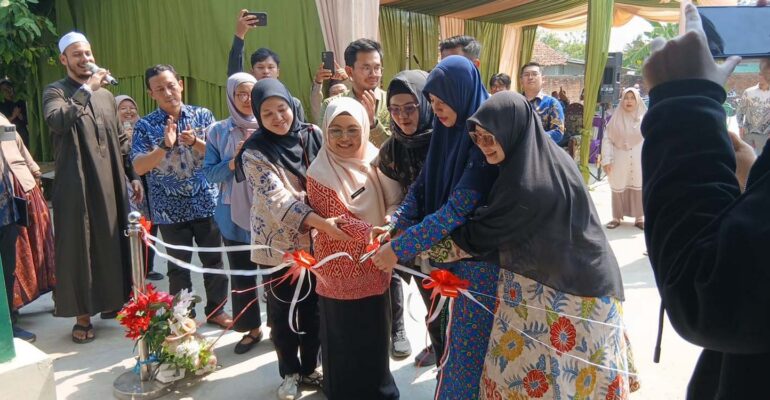
The Center for Islamic Business and Economics Studies (CI-BEST) at IPB University, together with Bank Indonesia, inaugurated a rice milling unit (RMU) and a vertical rice dryer at the Al Ashriyyah Nurul Iman Islamic Boarding School (PPNI) in Parung Subdistrict, Bogor Regency, West Java.
This event marks an important milestone in the development of a pesantren-based food security model that integrates agricultural technological innovation, community empowerment, and the strengthening of pesantren economic institutions.
The inauguration is part of the support provided under the Pesantren Economic Self Reliance Program based on the National Movement for Food Inflation Control (GNIP) for rice. These facilities are designed to support the improvement of paddy processing into premium quality rice ready for commercialization under the BERNI (Beras Nurul Iman) brand.
Prof Ahmad Junaedi, a representative of CI-BEST and Coordinator of the Rice Research Group at IPB University, stated that the construction of the RMU and vertical dryer can help Islamic boarding schools increase their rice production capacity. In addition, these facilities can also be utilized by other boarding school partners to promote the schools’ economic self reliance.
“Last year, we also conducted training and installed automatic weather stations (AWS). The installation of AWS aims to improve the accuracy of microclimate data at the test plots and support technical guidance activities for farmers and students as a technology based learning tool,” he said.
PPNI Director Umi Waheeda explained the organization’s active role in improving the boarding school’s economic ecosystem, particularly through the Free Nutritious Meals (MBG) program. To date, PPNI has utilized raw materials such as rice, vegetables, and chicken sourced directly from the boarding school’s own production.
“We began collaborating with BI after being invited by the Governor of BI in 2016 for a discussion regarding the potential of Islamic boarding schools in the development of the Islamic economy. At that time, PPNI was invited because it is one of the largest Islamic boarding schools in Indonesia and represents West Java, with a student body of 15.000. The support provided has continued through the development of the RMU and the vertical dryer,” she explained.
Arya Prana Hutama, representing Bank Indonesia’s Department of Economics and Finance (DEKS), explained that Islamic boarding schools can play a role not only in producing religious scholars but also in supporting Indonesia’s economy.
Furthermore, Yendra Efita, MP, from the Karawang Regency Office of Agriculture, Food Security, and Fisheries, also stated that the inauguration of the RMU and the synergy forum are strategic steps toward strengthening the rice commodity value chain while promoting the economic self reliance of Islamic boarding schools.
Not only does this support food security and rice price stability, but she also believes this strategic move is necessary to create productive business opportunities capable of improving the welfare of farmers and the surrounding community. (*/Rz) (IAAS/EPK)

