In Celebration of Eid al-Adha, IPB University’s HSC Provides Training on Qurbani Management for DKM Members
As the month of Dhu al-Hijjah 1447 AH begins and in celebration of Eid al-Adha, the Halal Science Center (HSC) at IPB University has once again taken strategic steps to ensure the quality of qurbani rituals across the country.
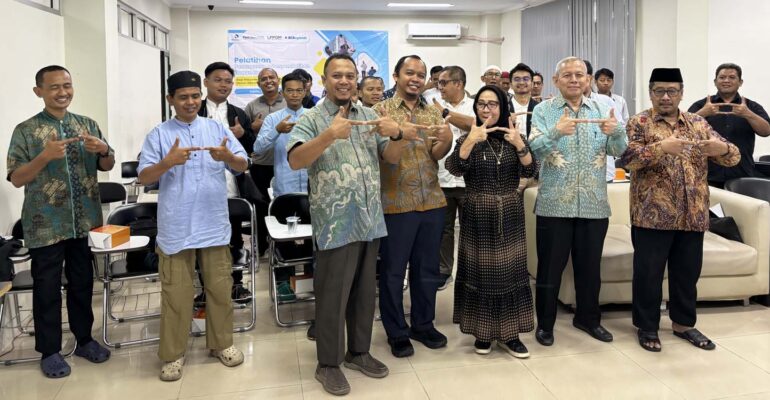
Through a collaboration with the Institute for Food, Drug, and Cosmetics Research (LPPOM) and PT Bank BCA Syariah, HSC IPB University successfully held the “Training on the Handling and Slaughter of Sacrificial Animals for the General Public and Mosque Management Board (DKM) Officials.”
Held in a hybrid format, the event was centered at the IPB Cilibende Campus in Bogor City while reaching hundreds of participants from various regions via the Zoom Meeting virtual platform.
The urgency of a thorough understanding of Islamic jurisprudence was the main focus of the first presentation delivered by KH Arwani Faishol Anwar. He thoroughly analyzed the sharia aspects of performing the sacrifice, ranging from the criteria for selecting valid animals to the procedures for carrying out the slaughter on site.
“The sacrifice ritual is an expression of our piety, therefore, its execution must be as perfect as possible in accordance with the Prophet’s guidance. The slaughterer must ensure that the knife severs the three main channels without hesitation: the windpipe, the esophagus, and the two carotid arteries in the neck. If these three elements are severed quickly, the animal does not suffer for long, the blood drains completely, and the resulting meat is guaranteed to be halal and thayyib,” he explained.
Turning to technical management and environmental sustainability, Edit Lesa Aditia, SPt, MSc, urged DKM officials to shift their approach to handling sacrificial animals after slaughter. This lecturer at the Faculty of Animal Science at IPB University emphasized the importance of accurately calculating carcass weight based on the animals’ physical condition, rather than simply judging by their outwardly large appearance.
Additionally, he placed special emphasis on the green-qurban campaign. “It’s time for us to stop using single use plastic bags when distributing sacrificial meat. Besides creating new piles of non biodegradable waste, certain types of plastic pose a risk of contaminating the meat’s hygiene. Sacrificial committees at mosques can start optimizing the use of local, eco-friendly containers such as bamboo baskets or banana leaves,” he said.
This educational session concluded with a practical demonstration led by an expert in animal anatomy and health, Dr drh Supratikno. He demonstrated proper techniques for handling sacrificial animals. Among these was the method of gently laying the animal down without causing excessive stress that could damage the quality of the meat.
He also highlighted a critical mistake frequently observed in mosque courtyards on the day of slaughter: the mixing of carcass handling with internal organs.
“Never cut or wash green offal, such as the stomach and intestines, near or in the same area where clean meat is being cut. Green offal contains millions of digestive bacteria. If the stomach contents leak and come into contact with the meat, those bacteria will multiply very quickly. This is the main reason why sacrificial meat often spoils quickly, even before it reaches the recipients,” he emphasized. (MW) (IAAS/EXC)