Size Doesn’t Determine Quality, Here’s How to Choose Eggs That Are Safe to Eat, According to a Professor from the Faculty of Animal Science at IPB University
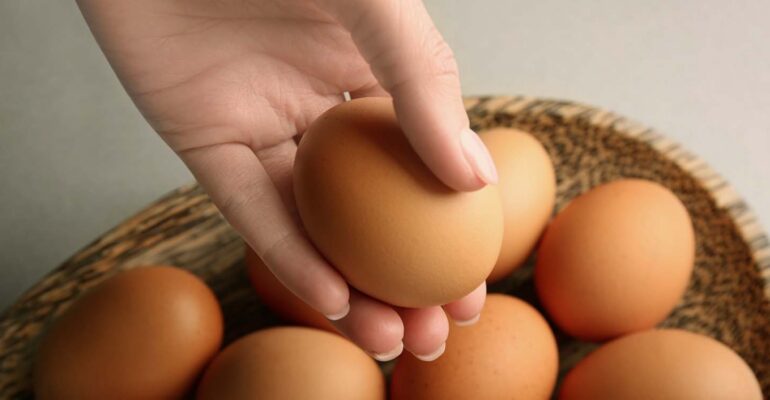
Have you ever wondered why large chicken eggs are sometimes sold at a lower price than small ones? This price difference isn’t due to quality, but rather relates to consumer purchasing habits and the egg sales system in the market.
Professor Niken Ulupi of the Faculty of Animal Science at IPB University explains that most chicken eggs in Indonesia are sold by the kilogram (kg), although some are sold by the piece. This situation makes smaller eggs more popular because a single kilogram can contain more eggs.
“Most chicken egg consumers in the general public belong to the lower-middle economic class. They prefer small sized eggs so that one kilogram can contain 16 eggs or more, which is why larger eggs are less in demand. This is what causes their price to be relatively cheaper,” explained Prof Niken.
According to her, egg size does not determine quality or food safety. As long as the eggs come from healthy chickens, are fed high-quality feed, and are raised under good management practices, both large and small eggs are safe to consume when prepared properly.
In addition to size, people also often distinguish eggs based on the color of their shells. Prof Niken explained that variations in egg color ranging from brown to white are influenced by genetic factors specific to the chicken strain that produces them.
“Eggshell color is also determined by the availability of pigments in their feed. Egg size can be influenced by genetics, the adequacy of nutrients in the feed, husbandry practices, and the age of the hens,” she said.
She added that egg size generally changes as hens age. During the early laying period, hens produce smaller eggs. As they get older, the eggs they lay tend to become larger.
How to Choose Eggs
To ensure high-quality eggs, Prof Niken advises consumers to examine the physical condition of the eggs when purchasing them. Good eggs have smooth shells, even and clean coloration, no cracks or breaks, and a normal oval shape. If a candling lamp is available at the point of sale, consumers can also select eggs with a small air cell at the blunt end.
Furthermore, she noted that egg quality is also influenced by storage duration. Freshly laid eggs are of higher quality than those that have been stored for a long time, especially at room temperature.
“Eggs that are safe to consume are those laid by healthy hens, freshly laid eggs, and eggs that have been properly and hygienically processed,” she concluded. (IAAS/EPK)