Overcoming Coastal Pollution in Central Bangka, IPB University Researchers Transform Shrimp Farm Waste into Organic Fertilizer for Oil Palm
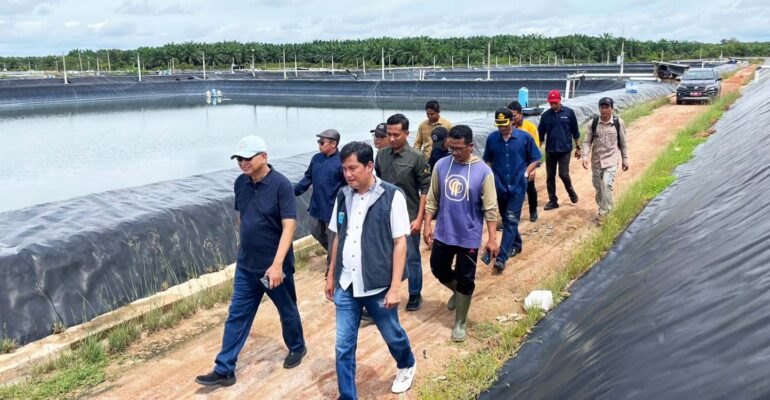
Shrimp molting shells or known as molting waste and muddy sediment resulting from uneaten shrimp feed have long posed an ecological threat to the waters in the shrimp farm areas of Central Bangka Regency, Bangka Belitung. Now, a team of researchers and lecturers from IPB University has successfully transformed this ecological threat into a new economic opportunity.
The research team led by Prof Tridoyo Kusumastanto has launched an innovation that utilizes shrimp farm waste to produce high value organic fertilizer specifically designed to meet the nutritional needs of oil palm plantations. PT Shrimpi has been officially designated as both a partner and the first pilot project for the application of this research.
Dr Kastana Sapanli, leader of the Tropical Marine Economics Program at IPB University’s Graduate School and a member of the research team, stated that this innovation employs an integrated multi-trophic aquaculture (IMTA) system. This is an integrated aquaculture approach that utilizes waste from one organism as a resource for another.
“Until now, shrimp molting waste from pond cleanings every 2–3 days was simply discarded and polluted coastal waters. Through this research, we collect these shrimp shells from the drainage channels to process them into chitin, which is then converted into chitosan. Not only the shells, but we also process the sludge sediment from uneaten feed and shrimp waste that is filtered through a rotary drum filter into raw material for organic fertilizer,” explained Dr Kastana Sapanli.
Dr Kastana guarantees that this organic fertilizer is 100 percent biologically safe because it undergoes an intensive chemical production process. The fertilizer production process involves various stages, ranging from washing and drying the shells, demineralization, deproteinization, to deacetylation to produce chitosan. Theoretically, this intensive chemical process can reduce or eliminate biological contaminants.
Before applying it to oil palm, the IPB University research team conducted preliminary trials on vegetable crops. The results showed significantly better growth compared to other commercial fertilizers. However, for commercial scale production, the research team is specifically targeting the oil palm sector.
“The reason is that Bangka has extensive oil palm plantations, making it a potential market. Sediment from aquaculture ponds is being repurposed into organic oil palm fertilizer to create economic value,” he said.
Furthermore, he noted that the research team will involve the local community in the fertilizer production process, starting with training for pond owners in Central Bangka. The second year of the research will involve oil palm farmers through training and guidance on fertilizer application in oil palm plantations.
“Based on the research roadmap, the commercial launch of the organic fertilizer is targeted for late 2027 after the product certification and downstream processing are completed. The steps required to reach the commercialization stage include laboratory testing of the fertilizer, field trials, and product certification,” explained Dr Kastana. (MHT)(IAAS/PRP)