IPB University Expert Stresses the Urgency of Vaccination and Control of Hunting Dogs Following the Tragic Incident in Jasinga
A suspected hunting dog attack that killed a child in Jasinga, Bogor Regency, has drawn public attention after being widely discussed on social media. This incident has raised concerns about the safety of using hunting dogs near residential areas while also increasing awareness of the importance of animal health and the prevention of zoonotic diseases such as rabies.
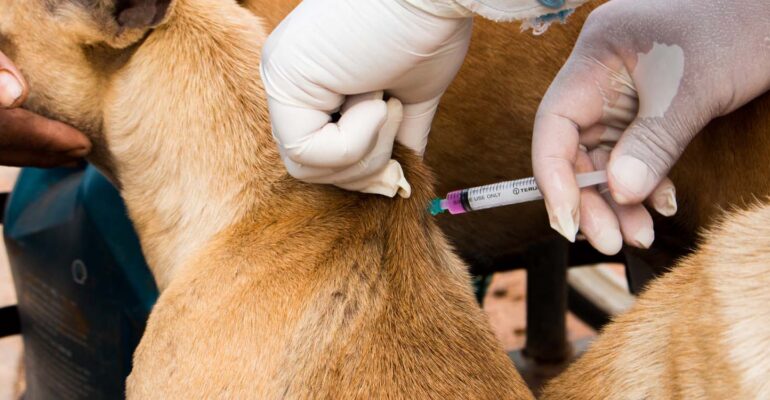
In response to this incident, Dr Agus Wijaya, a lecturer at the School of Veterinary Medicine and Biomedical Science at IPB University, noted that animal health particularly rabies vaccination must be a top priority in the management of hunting dogs within the community.
According to him, one of the issues that is still frequently encountered is the suboptimal implementation of rabies vaccination in hunting dogs. “It is possible that rabies vaccination has not been carried out consistently in that area. This is a matter that requires attention because vaccination is a fundamental step in maintaining animal health while also protecting the public,” he said.
Dr Agus explained that there are various factors that can trigger dogs to attack humans. In addition to the animal’s health not being properly monitored, inappropriate interactions between humans and dogs can also be a trigger.
“There are quite a few factors. There are still some people who own dogs for hunting but are reluctant to vaccinate them because they worry the dogs will become lethargic when used for hunting. In reality, that condition is usually only temporary after vaccination. Additionally, children sometimes do not yet understand how to interact with dogs, so they may act mischievously or disturb the animals without realizing the risks,” he explained.
Furthermore, he noted that the use of hunting dogs in areas adjacent to residential areas poses potential risks if not accompanied by proper management. According to him, the threats that need to be watched out for are not only related to the possibility of attacks but also the spread of rabies.
“The likelihood of rabies is quite high if vaccinations are not administered consistently. Therefore, monitoring the health of hunting dogs must be a priority,” he said.
To prevent similar incidents from recurring, Dr Agus emphasized the importance of pet owners taking responsibility for ensuring their dogs remain under control and receive adequate health protection.
“A good step is to get rabies vaccinations regularly and ensure dogs are leashed or safely kept in the yard so they don’t roam freely,” he said.
He also encouraged collaboration between the government, the hunting community, and the public to strengthen rabies prevention programs.
“Vaccination programs need to be conducted regularly and continuously. In addition, public awareness campaigns about the dangers of rabies must be continuously promoted so that the public understands the risks and preventive measures,” he concluded.
Through responsible animal management, public education, and consistent vaccination efforts, it is hoped that the risk of similar incidents can be minimized while creating a safer environment for both the public and pets. (AS) (IAAS/EXC)