IPB University Expert Discusses the Arrangement of MBG Kitchens to Support National Nutrition Improvement
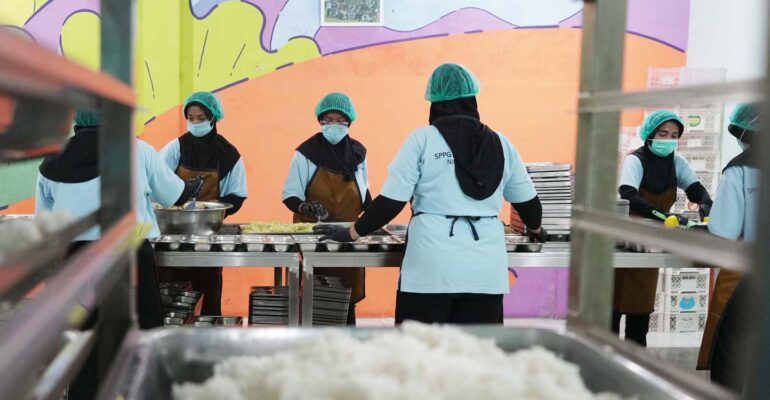
Professor at the Faculty of Medicine and Nutrition (FKGiz) of IPB University, Prof Hardinsyah, emphasized the importance of kitchen governance in the Free Nutritious Meal (MBG) program so that it can support the improvement of public nutritional quality, especially for students.
“The success of the MBG program is not only determined by the availability of food supplies, but also by a good kitchen management ecosystem,” said Prof Hardinsyah while serving as a guest speaker on TVRI’s Jendela Negeri program with the topic “Arranging MBG Kitchens, Supporting Nutrition Improvement” (6/8).
According to him, MBG kitchens need to be managed professionally based on nutritional standards, menu standards, procurement, storage, processing, portioning, and safe food distribution, up to the quality control of the food before it is provided to the beneficiaries.
He explained that good kitchen governance covers various aspects. Starting from determining kitchen points and partners; kitchen design and physical conditions that meet the requirements of hygiene and environmental sanitation, security, occupational health and safety; food waste management; to the availability of competent human resources (HR).
In addition, accountable and transparent management, policy enforcement, standard operating procedures (SOP), and ethics are required, along with multi layered supervision and audits, including the involvement of external parties such as trained parents of students and community leaders.
“Everyone who works and becomes an MBG partner must be motivated and have their mindset and behavior built for zero corruption and zero food safety incidence,” he stressed.
Furthermore, Prof Hardinsyah also emphasized the importance of using local food ingredients to support food security while simultaneously driving the local community’s economy.
During the dialogue, he also highlighted cross sectoral collaboration in the implementation of the MBG program. According to him, it is necessary to collect baseline/initial data regarding student participation and learning abilities; the participation of teachers, cadres, pregnant women, and lactating mothers, the nutritional and health status of beneficiaries; as well as local agromaritime and economic conditions. Additionally, food and nutrition education, as well as circular economy training, are important so that food waste can have a higher beneficial value.
“The BGN (National Nutrition Agency), relevant government institutions, universities, SPPG (Nutrition Fulfillment Service Units), farmers and business actors, as well as the community, need to work together so that this program runs safely, effectively, and sustainably,” he urged. (*/Rz) (IAAS/EXC)