Accelerating Sustainable Marine Innovation, IPB’s Department of Marine Science and Technology Unveils Engine Free Refrigerated Truck at ISOSS 2026
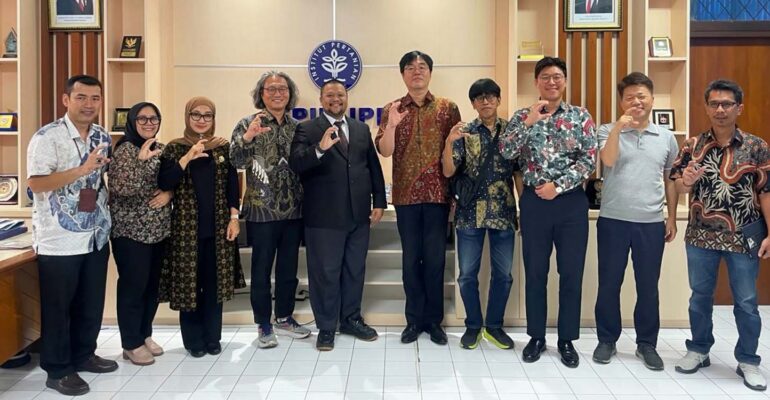
The Department of Marine Science and Technology (ITK), Faculty of Fisheries and Marine Sciences (FPIK) at IPB University successfully hosted the International Symposium on Ocean Science and Technology (ISOSS) 2026 Workshop.
Under the theme “Advancing Marine Science through Technology Innovation for Sustainable Ocean,” the event specifically focused on the application of phase change material (PCM) technology for the maritime and fisheries sectors.
An In Depth Look at PCM
The workshop was officially opened by the Chairman of the ITK Department, Dr Syamsul Bahri Agus. To provide a comprehensive perspective spanning from upstream research to downstream industry, the workshop featured a lineup of experts from the Korea Institute of Industrial Technology (KITECH), industry practitioners from EST and Klenair, as well as the Indonesian Cold Chain Association (ARPI), moderated by Dr Ayi Rahmat, Secretary of the ITK Department.
The speakers explained how PCM can serve as an efficient thermal solution for maintaining temperature stability, which is crucial in the fisheries supply chain. Dr Kim Jeong Yeaol from KITECH explained how the research idea began and the working theory of PCM, while Shin Yong Jin (EST) and Kim Bo Sun (Klenair) discussed the business prospects and technical sustainability of PCM for Indonesia’s fisheries and marine sectors.
PCM Truck Demonstration
One of the main highlights of this year’s ISOSS 2026 event is the live demonstration of a PCM truck. Through this demonstration, participants witnessed firsthand a logistics cold storage system capable of maintaining a constant low temperature without relying on active refrigeration units or conventional fuel during transit.
This PCM based technology leverages the material’s ability to absorb and release thermal energy during phase change processes, making it a far more environmentally friendly and energy efficient alternative for seafood distribution.
Opportunities for Strategic Collaboration
In response to this innovation, the Dean of the Faculty of Fisheries and Marine Sciences at IPB University, Dr Beginer Subhan, expressed his high appreciation and shared his strategic vision for the future. He emphasized that PCM technology is highly relevant to the geographical challenges faced by Indonesia as an archipelagic nation.
“Going forward, this PCM technology is projected to become a highly promising area of collaboration for the Faculty of Fisheries and Marine Sciences (FPIK) at IPB, particularly in efforts to maintain quality and improve the efficiency of post harvest management of Indonesia’s fishery resources,” he said.
Through the synergy of academia, industry, and government, he hopes this innovation can be widely implemented soon to support the creation of a sustainable ocean and marine food sovereignty. (*/Rz) (IAAS/LAN)