
Student of IPB Developed the Application Method of Fertigation on Cayenne Chili
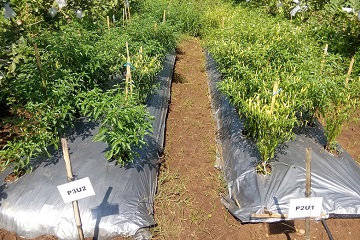
Chili was one of the most important horticultural commodities. One of the chili commodities was much in demand by the the community of Indonesia, namely the cayenne chili. The cayenne chili had a high economic value, and the demand was increasing every year. The cayenne chili needed to be cultivated intensively both against the pests, the weeds, the water supply, and the fertilizer.
Adea Oktavia, the student of the Department of Agronomy and Horticulture, Faculty of Agriculture (Faperta), Bogor Agriculture University (IPB), did a research to know the application metod of applying the appropriate fertilizer using the drip irrigation and the Mulsa Polyethylene on the cayenne chili plant.
“The main problem to be considered in the cultivation of the cayenne chili plant is the weeds. This is because the weeds can disrupt the production of the cayenne chili. Other than that, the improper and excessive dosage of the fertilizer can disrupt the growth of the chili plant itself,” said Adea.
The fertigation was one way of providing the irrigation water along with the fertilization. The fertigation could be done simultaneously with the drip irrigation. The drip irrigation was a way of watering the plants directly on both the soil surface and below the soil surface through the droplets continuously and slowly. Through the fertigation, the fertilizer was dissolved into the water then simultaneously given to the plant.
The Mulsa was a non-living material used to cover the surface of the soil that had the function to protect from the impact of the rain, to suppress the growth of the weeds, the temperature, and the evaporation. Generally, the mulsa used by the farmers was the mulsa polyethylene, because the quality was good and the price was cheap.
Adea designed three kinds of treatments namely Split Application, Drip Irrigation, and conventionally (without using the drip irrigation). The seedling of chili seeds with the planting media such as the sand mixture, the compost, and the charcoal husk. The giving of mulsa was done after the application of the basic fertilizer, namely the cow manure. The installation of the drip irrigation was done before the planting, namely in split and drip treatments.
The result of the research showed that the application of split and drip gave the vegetative and generative growth of the plants. The split application gave the higher yield compared to the conventional treatment i.e. 3458.33 g. The drip fertilization application provided the economical advantages and the higher efficiency in the labor usage. (FY/nm)

