Policy on Live Buffalo Imports, Perspectives from an Expert at IPB University’s Faculty of Animal Science
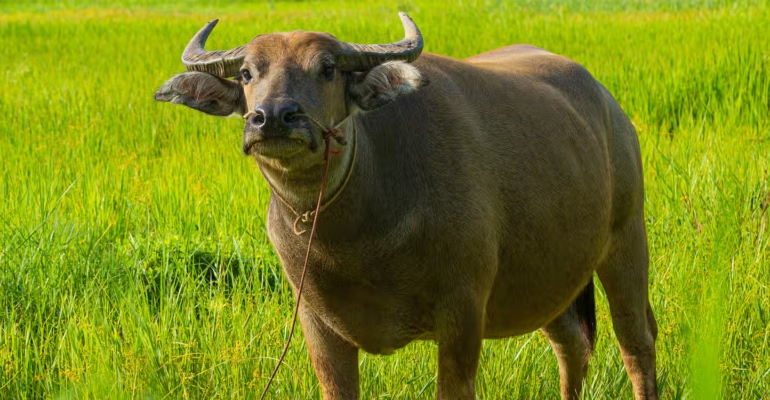
Dr Muhamad Baihaqi, a lecturer at IPB University’s Faculty of Animal Science, shared his views on the Indonesian government’s policy regarding the import of live buffalo. He believes that importing live buffalo can help meet national meat demand, especially when domestic production is insufficient to meet that demand.
“National demand for beef and buffalo meat in 2026 is projected to reach approximately 794.000 metric tons, while domestic production is only around 421.000 metric tons. Given this gap, importing live buffalo can serve as one tool to ensure a steady meat supply,” he explained.
However, he emphasized that this policy must be accompanied by efforts to strengthen local livestock farming to avoid increasing dependence on imports. In his view, the policy should complement, not replace, efforts to develop local livestock farming.
“The government needs to ensure that this policy does not depress local livestock prices at the farmer level or increase dependence on imports,” he said.
Imports for Short-Term Needs
Dr Baihaqi explained that there are three categories of livestock that can be imported: breeding stock to increase the population, feeder livestock for fattening, and slaughter-ready livestock to meet meat demand. To address supply shortages in a relatively short period, importing feeder livestock or slaughter-ready livestock is considered more appropriate.
“If fattened or slaughtered in Indonesia, imported livestock also have the potential to provide added value for feedlot operations, slaughterhouses, job creation, and the meat processing industry,” he said.
From a food perspective, buffalo meat can serve as an alternative source of animal protein. It has a good protein content, and under certain conditions, its fat content is relatively lower than that of beef. The meat can also be processed into meatballs, sausages, rendang, and other food products.
Buffalo Population Continues to Decline
On the other hand, Dr Baihaqi highlighted the national buffalo population, which is showing a downward trend. According to data from the Central Statistics Agency (BPS), the number is projected to drop from approximately 1,09 million head in 2022 to about 755.000 head in 2025.
In fact, he noted, Indonesia possesses significant genetic resources from local buffalo breeds, such as the Pampangan, Kalang, Sumbawa, and Toraya buffalo. However, traditional livestock management practices, suboptimal reproductive management, a shortage of high quality breeding bulls, and fluctuating feed quality have resulted in relatively slow population growth.
Dr Baihaqi believes that strengthening breeding programs, improving reproduction and feed, and developing livestock areas based on regional potential should be priorities. One opportunity is the utilization of post-mining reclamation land suitable for the development of swamp buffalo, such as the Pampangan and Kalang buffalo.
Importing productive breeding stock and high quality sires may also be considered to accelerate population growth and improve genetic quality, while taking into account livestock adaptation, health, and the preservation of local breeds.
“Importing buffalo for consumption helps maintain the meat supply in the short term, while planned imports of breeding stock and the strengthening of local breeding programs must go hand in hand as a long-term strategy toward national self-sufficiency in meat production,” he concluded. (dh) (IAAS/DAM)