
Highlighting the Stories of Waste Sorters, IPB University Students Identify Five Key Needs
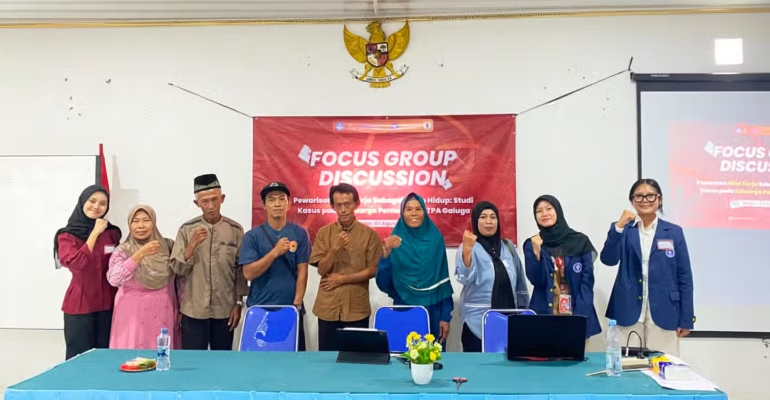
Behind the waste sorting activities at the Galuga Final Disposal Site (TPA) in Cibungbulang Subdistrict, Bogor Regency, there are families who continue to struggle to make ends meet.
Understanding their lives requires more than just observing activities on the ground. Therefore, IPB University students and the ‘PERNIK’ team from the Student Creativity Program in Social and Humanities Research (PKM-RSH) organized a focus group discussion (FGD) to hear firsthand about the community’s experiences and needs.
Listening to Their Needs
From these discussions, Ni Komang Ayu Maharani Putri stated that the team identified five key needs deemed essential to support the lives of these families who work as waste sorters.
First, an emergency task force and a health post. Waste sorting activities carry safety and health risks, making access to first aid and health services a critical need.
“Having health posts near the work sites can help provide immediate care in case of emergencies,” said Ayu.
Second, family skills development. According to Ayu, reliance on waste sorting makes families vulnerable to fluctuations in commodity prices and economic conditions. Therefore, additional skills can open up other income opportunities and provide families with more options to meet their basic needs.
Third, strengthening financial management for productive families. Since income isn’t always consistent from day to day, the ability to manage finances becomes crucial. “Strengthening financial capacity is expected to help families manage their income while developing productive activities that can support the household economy,” she continued.
Fourth, strengthening social protection and reducing economic uncertainty. When income fluctuates while needs persist, families require a safety net to cope with unforeseen circumstances. Social protection can help mitigate the risks families face during difficult times.
Fifth, scholarships and easier access to education. Education is viewed as a pathway to broader opportunities for the next generation. Educational support is expected to help children from families of waste pickers gain access to learning without being unduly burdened by their families’ economic circumstances.
Direction for Change
These five needs, as identified by Ayu, demonstrate that the challenges faced by families of waste pickers extend beyond income alone. Health, skills, financial management, social protection, and education are all interconnected in building family resilience.
“For us, the FGD serves as a vital space to understand these issues based on the community’s own experiences. Ultimately, empowerment must begin by listening to what is truly needed,” she said.
Based on these FGDs, the voices of the waste sorters serve as a foundation for designing more appropriate measures not only to help them survive but also to give their families the opportunity to build a better life. (*/Rz) (IAAS/SSR).

