IPB University Expert: Seasand Mining Risks Disrupting Coral Reef and Sunu Grouper Ecosystems
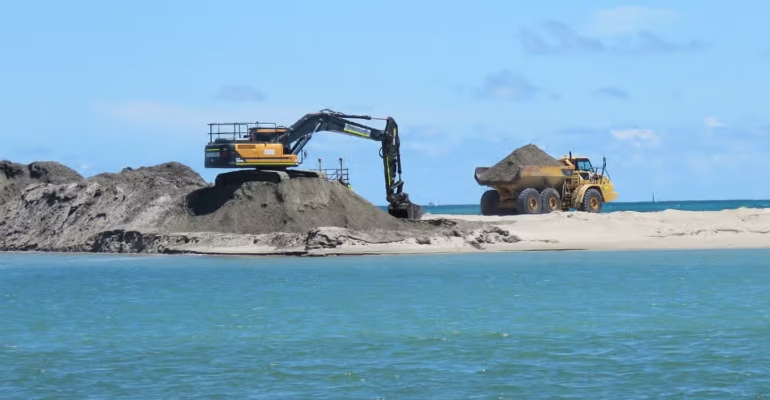
Seasand mining activities around Numbing Island, Riau Islands, warrant attention from a conservation perspective because dredging the seabed has the potential to increase turbidity and disrupt coral reef ecosystems.
Dr Meutia Samira Ismet, a marine biology expert and lecturer in the Department of Marine Science and Technology at IPB University, explained that the impacts of marine sand mining are not limited to the dredging site but also have the potential to affect surrounding coastal ecosystems.
“Dredging increases the level of suspended particles, leading to water turbidity. This can certainly impact the sustainability of coastal ecosystems, particularly coral reefs and seagrass beds,” explained Dr Meutia.
From Coral Reefs to Sunu Grouper
She noted that increased turbidity can hinder the penetration of sunlight into the water. This condition has the potential to disrupt organisms that perform photosynthesis, including Zooxanthellae algae, which have a symbiotic relationship with corals.
At the same time, suspended sand and dust can cover coral polyps, thereby hindering their survival and growth. This disruption to coral reefs can trigger a domino effect on other marine life.
“Coral reefs serve as habitats for various marine organisms that interact with one another within an ecosystem. When habitat quality declines, the diversity and abundance of organisms dependent on that ecosystem are also likely to decline,” she said.
Dr Meutia explained that one species closely linked to the coral reef ecosystem is the sunu grouper.
“The sunu grouper is a territorial reef fish that is highly attached to its habitat. When the habitat is disturbed, its life and growth can also be disrupted,” she explained.
In addition to being territorial, the sunu grouper is a top predator that relies on the availability of prey within the ecosystem. Increased turbidity can impair the fish’s visual ability to locate and capture prey. Consequently, changes in habitat conditions can affect the sunu grouper’s food availability and growth.
Long Term Effects
Dr Meutia added that the increase in organic matter resulting from dredging can also promote excessive macroalgal growth. Since macroalgae grow faster than coral, this can alter the ecosystem’s balance and cover the coral reefs.
Changes in water chemistry also have the potential to reduce oxygen levels and disrupt the balance of microorganisms, including increasing the risk of the proliferation of opportunistic bacteria such as Vibrio.
These impacts, she continued, can be long term if disruptive activities occur continuously and lead to coral reef degradation. Ecosystems that have been damaged take a long time to recover naturally.
“When healthy coral reefs degrade, their natural recovery takes a very long time. This situation can ultimately affect biodiversity, including the population and health of the sunu grouper,” she said. (dr) (IAAS/LAN)