Forest and Land Fires Harm Not Only Harms for Humans, IPB University Expert Highlights Systemic Impacts on Orangutans
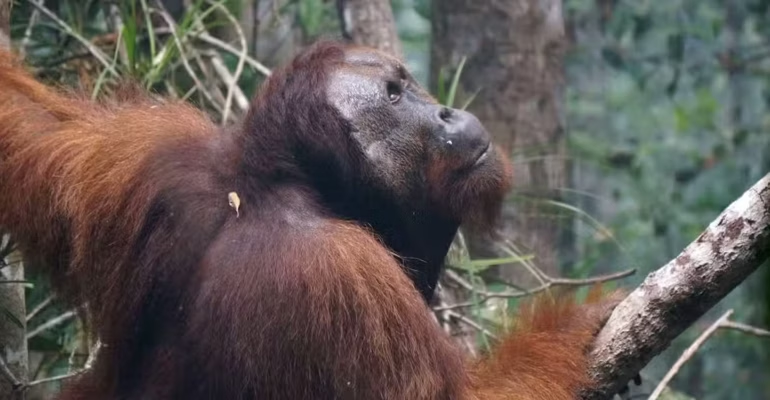
Smoke from forest and land fires (karhutla) does not only affect human health. Amid burning forests, orangutans also lose their habitats and food sources, are exposed to pollution, and face potential health problems that could threaten their populations.
Systemic Impacts
According to Prof Ronny Rachman Noor, an IPB University expert in ecological genetics, forest and land fires in Kalimantan and Sumatra have systemic impacts on wildlife, particularly orangutans, whose populations are already in critical condition.
“Orangutans are currently categorized as Critically Endangered because their populations continue to decline due to habitat and ecosystem degradation caused by deforestation, forest fires, and poaching.
The orangutan population in Tapanuli is now estimated at only around 716–800 individuals, while in Kalimantan, approximately 104.700 remain,” Prof Ronny explained.
karhutla further intensify these pressures. In addition to losing their habitats, orangutans also lose food sources and may be forced to leave forest areas and move closer to human settlements. This increases the potential for conflict between humans and wildlife.
“karhutla also force orangutans out of their habitats and closer to human settlements, which will certainly increase the risk of conflict with humans. In the future, these conflicts are expected to place even greater pressure on already very small orangutan populations,” he said.
Prof Ronny explained that smoke exposure can also directly affect orangutan health. Microscopic PM2.5 particles can enter the respiratory tract and reach the alveoli of the lungs, causing inflammation and irritation.
In the short term, this exposure can lead to oxygen deficiency, coughing, and shortness of breath, while prolonged exposure may potentially cause bronchitis and chronic obstructive pulmonary disease.
“From the perspective of orangutan health, smoke and pollutants from forest fires are extremely harmful to their lungs and metabolism because their respiratory systems are highly sensitive to air pollution,” he explained.
Smoke exposure can also disrupt metabolism and the immune system due to oxidative stress. A loss of appetite can leave orangutans weak, less active, and cause them to lose weight. Moreover, physiological stress caused by smoke exposure may interfere with their reproductive systems, adding further pressure to orangutan populations.
Prof Ronny emphasized that forest and land fires are no longer a local issue. Their impacts have extended to climate balance, health, the economy, and the sustainability of ecosystems.
According to him, the ongoing forest and land fires in Kalimantan and Sumatra are no longer merely a local issue or a problem for Indonesia alone, but have become a global concern because they have disrupted climate balance, public health, and the global economy.
“In a situation like this, it is not an exaggeration for the world to demand concrete action from Indonesia to end this annual cycle of forest fires by implementing sustainable forest fire prevention, strictly enforcing the law against those responsible for burning forests and land, strengthening global climate commitments, improving transparency of data and information on impacts so that the international community can help monitor the situation, and enhancing regional cooperation to strengthen cross-border coordination in reducing the impacts of haze,” Prof Ronny concluded. (*/Rz) (IAAS/KAL)