LPA2I Helps IPB University’s Wood Innovations Break into the Market and Industry
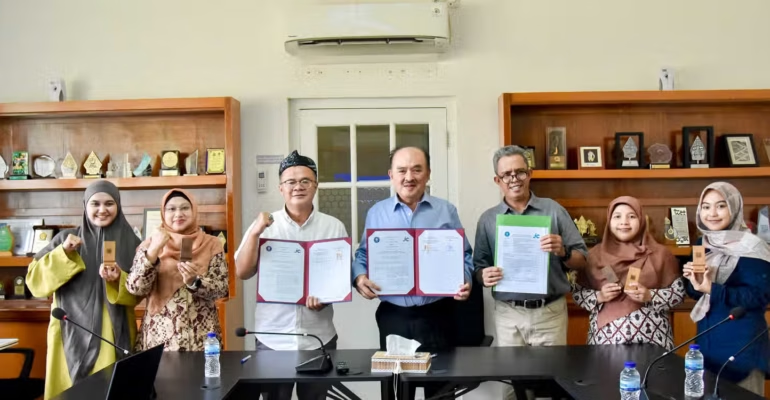
Technological innovations in wood modification using environmentally friendly heat and chemical treatments, developed by Prof I Wayan Darmawan, are entering the downstream and commercialization stages through a licensing partnership between IPB University and PT Jaya Cemerlang Industry.
This collaboration is aimed not only at producing the innovation but also at opening up opportunities for the utilization of young wood, which has traditionally faced limitations in terms of durability and market value.
The Chair of the Institute for Agromaritime Development and Innopreneurship Acceleration (LPA2I) at IPB University, Dr Handian Purwawangsa, noted that support for innovation does not end with the licensing agreement. LPA2I opens up opportunities for market development by helping to showcase and introduce innovative products to IPB University’s network.
“We can request samples and detailed product descriptions so we can help promote and display them at IPB. That way, when visitors come, your products can be recognized and even purchased on the spot,” explained Dr Handian.
Jimmy Chandra, CEO of PT Jaya Cemerlang Industry, views this as a positive initiative, as it serves as a bridge and a catalyst for increasing the utilization of Indonesian timber.
According to him, the timber industry faces challenges because some of the available timber comes from relatively young trees, while the market demands products with good quality and durability.
“Thanks to Mr Wayan’s innovation, we no longer need to wait decades for our timber to be ready for use. In just about five years, the output is already of good quality,” said Jimmy.
He explained that improving timber quality is also crucial for restoring market confidence in Indonesian timber products. Until now, the limited durability of certain types of wood has led people to switch to materials like aluminum and light gauge steel for construction.
Therefore, this modified wood innovation is being promoted in the domestic market through education and product promotion. The innovation was subsequently branded “IDOLA” as the identity of a product developed from modified wood technology resulting from IPB University’s innovation. IDOLA is not only intended for use in furniture but is also being developed into various functional products for everyday needs.
The development of IDOLA products also opens opportunities to optimize the use of wood scraps from the production process, one example being a phone holder. This approach simultaneously reinforces the principle of more efficient material utilization and opens opportunities for product diversification in line with market needs.
Furthermore, the commercialization of this innovation is expected to have an impact all the way back to the upstream sector. Jimmy expressed his hope that the increased demand for high quality wood would encourage the public to plant trees again while also creating economic opportunities for farmers.
He also highlighted the importance of improving farmers’ well-being, including women who are involved in agricultural activities but still receive relatively low compensation. “Our hope is that people will be willing to plant again, so that we can empower farmers and produce timber for our manufacturing,” he said.
For Prof I Wayan Darmawan, the entry of this innovation into the downstream phase is a crucial step following the development process and collaboration with partners, including international partners that had been carried out previously. He also expressed his gratitude to LPA2I and IPB University for their full support of this commercialization process, which can serve as a model for the development and downstream processing of other innovations within the IPB University community. (*/Rz) (IAAS/LAN)