Meet Yalanda and Nabila: IPB University’s Innovations, Indonesia’s First Two Self-Pollinating Okra Varieties
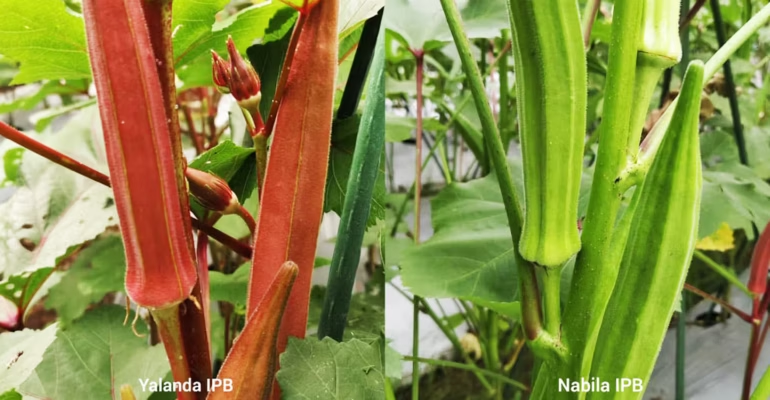
After successfully developing more than 30 high yielding chili pepper varieties, IPB University researcher Prof Muhamad Syukur has once again introduced a new breakthrough in the field of healthy food. This time, he has officially registered two high-yielding varieties of local okra (bamia) to obtain Plant Variety Protection (PVT) from the Ministry of the Republic of Indonesia.
The two varieties are named Yalanda IPB and Nabila IPB. Prof Syukur explained that the names of the two varieties carry their own meanings. “Nabila, which is characterized by green pods, comes from the Arabic language and means noble, honorable, and virtuous. Meanwhile, Yalanda comes from Yolanda, meaning violet flower, the color purple,” said the plant breeding expert.
Prof Syukur explained that the Yalanda IPB and Nabila IPB varieties are the first open pollinated okra varieties to be released in Indonesia. Because they were developed entirely domestically, these two local varieties have far better adaptability to Indonesia’s humid tropical climate and local pest threats. Not only are they adaptable, but their crop yields are also significantly higher.
“They reach the flowering stage very quickly, just 28 to 36 days after planting. Then, 33 to 44 days after planting, the okra is ready for harvest,” said Prof Syukur.
However, he offered an important note for farmers harvesting this vegetable. “Once the flowers bloom, the okra pods must be harvested within 3 to 5 days. If harvested too late, the texture of the okra pods will become hard, reducing their quality,” he added.
From a health perspective, both of these okra varieties maintain their reputation as superfoods. Both Yalanda IPB and Nabila IPB have excellent antioxidant profiles and have been proven effective in helping to control blood sugar levels (diabetes) and cholesterol.
Although the domestic market share for okra consumption is not yet very large, Prof Syukur is optimistic that the popularity of this crop will continue to skyrocket as public awareness of healthy lifestyles increases.
For farmers, this crop offers very promising profit margins compared to other conventional vegetables. Not only is caring for the plants relatively less complicated than for other crops, but okra also has vast export opportunities.
“The market isn’t very large in Indonesia right now, but over time, okra will become more widely known. The economic potential is enormous, especially if we can meet export demand from Japan. Currently, farmers in East Java have already successfully made such exports,” concluded Prof Syukur. (MHT) (IAAS/STD)