IPB University Expert Reveals Key Factors for the Success of B50 Biodiesel in Advancing Low Emission Energy
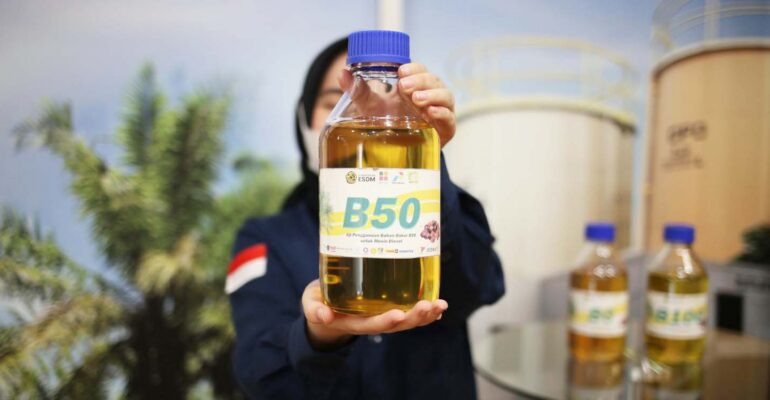
The implementation of palm oil based B50 biodiesel is considered to have significant potential to reduce greenhouse gas (GHG) emissions compared to conventional fossil diesel.
However, Dr Leopold Oscar Nelwan, a lecturer in the Department of Mechanical and Biosystems Engineering at IPB University, emphasized that these environmental benefits can only be achieved if supported by sustainable production practices, an efficient distribution system, and long-term testing to ensure the reliability of both the fuel and engine performance.
He explained that calculating GHG emissions throughout the life cycle of palm oil based biodiesel is a complex process influenced by numerous factors.
Palm oil cultivation practices, processing methods, feedstock types such as crude palm oil (CPO), refined bleached deodorized palm oil (RBDPO), and palm fatty acid distillate (PFAD), as well as the methodology used to calculate land-use change, all contribute to varying emission estimates.
“In general, numerous studies indicate that palm oil biodiesel produces lower GHG emissions than fossil diesel. However, these benefits can be significantly diminished if the biodiesel production being assessed is associated with the conversion of high carbon stock land, such as forests or peatlands,” he said.
From a technical perspective, he explained that biodiesel differs from fossil diesel because it consists of fatty acid esters. This characteristic makes biodiesel more likely to absorb moisture from the environment and, when unsaturated bonds are present, more susceptible to oxidation.
“Oxidation can produce peroxides, organic acids, and gums that degrade fuel quality. Meanwhile, water content can trigger hydrolysis, corrosion, and microbial growth, with these risks becoming more pronounced in higher biodiesel blends such as B30 to B50 if they are not managed properly,” he explained.
Nevertheless, Dr Leopold noted that biodiesel quality is determined not only by its chemical composition but also by its production process, storage, distribution, blending, and field application.
“Various vehicle tests have shown that high-percentage biodiesel blends can still be used in modern diesel engines without significant performance degradation over thousands of kilometers of testing,” he said.
However, he added that these results were generally obtained using freshly produced fuel and therefore do not fully represent long term storage and distribution conditions.
Therefore, he emphasized that the implementation of B50 should be supported by long-term testing, regular monitoring, and input from industry, academia, users, and the public.
“Biodiesel should be regarded as a transitional technology toward a lower emission transportation system. In the future, its role will continue to evolve alongside technological advancements, energy policies, and transport electrification until a new balance is achieved in pursuit of the Net Zero Emissions (NZE) target for 2050–2060,” he said. (dr)(IAAS/PRP)