Why Is Weather Modification Conducted When the Atmosphere Is Unstable? Here’s the Answer from an IPB University Expert
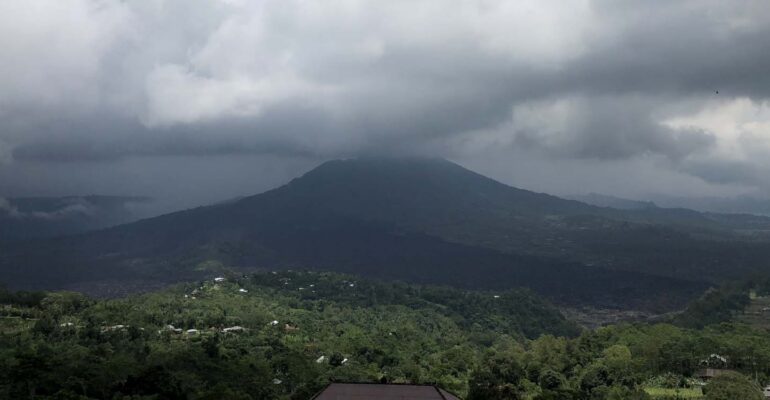
Prof Yonny Koesmaryono, a professor at the Faculty of Mathematics and Natural Sciences (FMIPA) at IPB University, explained that weather modification is not an attempt to create rain from conditions that lack cloud potential. This technology works by intervening in the physical processes occurring in the atmosphere.
“Weather modification involves making changes to something that already exists. So it’s not about creating rain or water, but rather modifying the processes occurring in the atmosphere,” he said during the IPB Pedia program, which aired on the IPB TV YouTube channel.
Taking Advantage of Natural Processes
Prof Yonny explained that rain forms through the hydrological cycle. Water from the ocean, rivers, lakes, and land evaporates into the atmosphere, then cools to form clouds. However, not all clouds produce rain.
In weather modification technology, intervention is carried out on clouds that have the potential to develop into rain, such as cumulus clouds. This is done by adding hygroscopic materials or aerosols that act as condensation nuclei, thereby accelerating or optimizing the cloud growth process.
“What we do is intervene in the physical processes within the clouds so that their growth can be controlled. So it’s not about creating rain from scratch,” he explained.
Success Factors: Atmospheric Conditions
Prof Yonny explained that unstable atmospheric conditions are a key factor in the success of weather modification operations. Under such conditions, evaporation occurs actively and cloud growth happens more rapidly.
“Conversely, when the atmosphere is stable, clouds tend not to develop, making intervention less effective. Therefore, before an operation is carried out, the team first measures atmospheric conditions using various instruments, including weather balloons, to determine the level of atmospheric stability,” he explained.
He added that weather modification technology is also used to help mitigate the impacts of extreme weather. However, once a storm has become very intense, intervention efforts become more difficult to carry out.
“Weather modification technology is an effort to harness growing clouds for the benefit of humanity and to reduce the potential impact of disasters, both during the rainy season and the dry season,” he concluded. (Fj) (IAAS/DAM)