An Abundance of Sacrificial Meat? Here’s the Proper Way to Store and Process It, According to an IPB University Expert
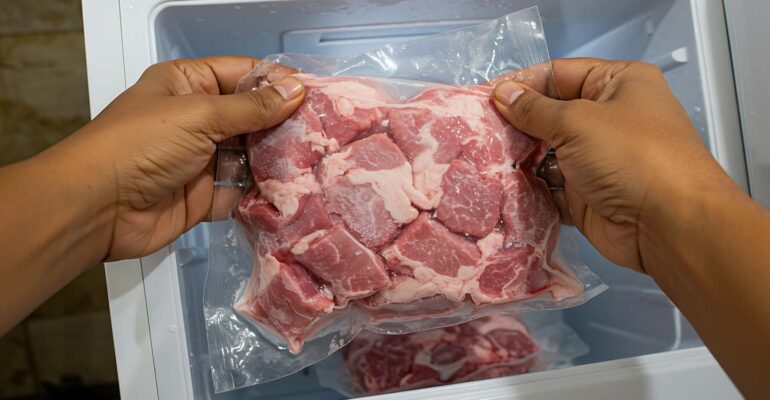
The Eid al-Adha tradition is synonymous with the slaughter of sacrificial animals. However, the abundance of sacrificial meat often means that not all of it can be processed at once. Therefore, proper handling and storage are essential to maintaining the quality and safety of the meat.
Dr Tuti Suryati, a lecturer in the Division of Animal Product Technology, Department of Animal Production and Technology, Faculty of Animal Science at IPB University, shared several guidelines on how to properly store and process sacrificial meat. “There are several initial steps for handling freshly received sacrificial meat before it is processed or stored,” she explained.
Dr Tuti explained that the first step is to separate the meat from the offal. Next, the meat and offal should be washed with clean water, especially if there is dirt such as soil, sand, gravel, or grass adhering to them.
“After washing, the meat must be drained until no water drips from its surface. The meat is then packaged as needed, for example, in 250 gram or 500 gram portions using odorless transparent plastic. Meanwhile, the offal should be cooked first if you plan to store it frozen,” she said.
Furthermore, sacrificial meat can be cooked immediately, stored at a cool temperature in the refrigerator, or frozen in the freezer. Regarding storage in the refrigerator, Dr Tuti recommended that the meat be stored frozen in the freezer and packaged in portions suitable for individual servings.
“Processed meat can be stored frozen in packages sized for a single family meal and prepared just before serving. Before cooking, frozen meat must be thawed properly and heated,” explained the lecturer from the Faculty of Animal Science at IPB University.
She explained that the thawing process can be done in the refrigerator. Other methods include soaking the meat in cold water without opening the packaging, placing it on a special hygienic metal tray, or using a microwave.
Dr Tuti reminded the public not to thaw frozen meat at room temperature without its packaging. She also emphasized not to refreeze meat that has already been thawed.
In addition to storage, Dr Tuti also shared strategies for proper processing of sacrificial meat. She advised against cooking the meat while it is still frozen, as this can result in a tough texture. “The use of spices rich in antioxidants, along with cooking techniques that involve sufficient heat and time, is also recommended to produce healthier and more delicious dishes,” she said.
She added that meat should be cooked thoroughly, whether by boiling, roasting, grilling, or frying. However, people should avoid overcooking the meat until it is charred, especially when preparing satay or grilled meat.
To make the satay meat more tender, Dr Tuti recommends grating pineapple over it or wrapping the meat in papaya leaves before cooking.
Meanwhile, for frozen sacrificial meat, the meat can be refreshed by soaking it still in its packaging in cold water until it returns to a fresh state before being prepared as needed. (Lp) (IAAS/DON)