Ahead of Eid al-Adha, IPB University Deploys 525 Animal and Sacrificial Meat Inspectors
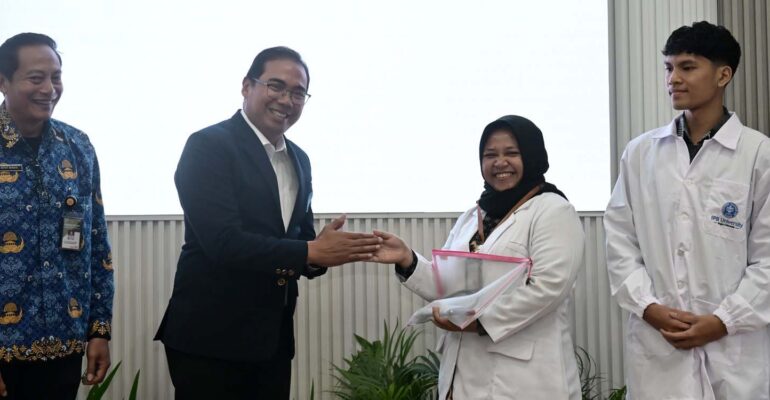
In anticipation of Eid al-Adha 1447 AH, the School of Veterinary and Biomedical Sciences (SKHB) at IPB University has once again deployed hundreds of animal health and sacrificial meat inspectors.
A total of 525 inspectors, comprising faculty members, veterinarians, professional students, and undergraduate students, have been prepared to support the safe, healthy, intact, halal, and hygienic performance of the sacrifice across various regions.
The Rector of IPB University, Dr Alim Setiawan Slamet, stated that the duties of these sacrificial inspectors are not merely technical tasks, but a blend of scientific knowledge, religious devotion, and service to the community.
According to him, the inspection of sacrificial animals plays a crucial role in safeguarding public health while ensuring the perfection of the community’s religious observances.
“When an inspector declares this meat safe, they are safeguarding two things simultaneously, namely public health and the integrity of the community’s worship,” he said during his opening remarks at the Send off Ceremony for Animal and Sacrificial Meat Inspectors held at the SKHB Transformation Hall, IPB Dramaga Campus, Bogor (5/20).
He also emphasized the importance of professional integrity in conducting antemortem and postmortem inspections with meticulous care, honesty, and in accordance with standards.
In addition to serving as inspectors, the officers are expected to act as educators for the public regarding animal welfare principles and hygienic meat handling.
The Executive Chair of the 1447 H Animal Health and Sacrificial Meat Inspection Program, Dr drh Ardilasunu Wicaksono, explained that the officers will be deployed to several regions, including Jakarta, the City of Bogor, Bogor Regency, and the City of Depok.
Of the total 525 personnel, 205 officers are stationed in Jakarta and 187 in Bogor City.
He added that the demand for sacrificial animal inspections is currently on the rise. According to him, this trend indicates that public awareness of the importance of food safety from animal sources is increasing.
“Public awareness regarding ensuring that healthy animals and safe meat are distributed is growing,” he said.
The Director of Veterinary Public Health at the Ministry of Agriculture, Dr drh I Ketut Wirata, who was also present, stated that the 2026 sacrificial animal inspection will be conducted nationally and in a coordinated manner, involving the central government, local governments, professional organizations, and universities.
According to him, the presence of animal health inspectors is a crucial component in ensuring that the sacrificial process adheres to the principles of safety, health, integrity, halal compliance, and animal welfare.
He revealed that, based on data from the Ministry of Agriculture, the national supply of sacrificial animals in 2026 is estimated at around 3,24 million head, while the demand is projected at 2,35 million head, ensuring that the stock is safe and sufficient.
Nevertheless, vigilance against animal diseases such as foot and mouth disease (PMK), lumpy skin disease (LSD), anthrax, and other zoonotic diseases must still be strengthened. (dr) (IAAS/WSG).