
IPB University Develops Meat Analog Alternatives to Support Sustainable Food Research
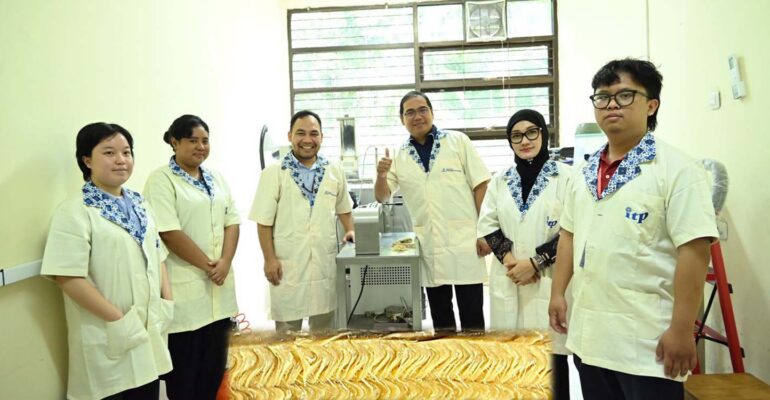
Meat analog alternatives are becoming increasingly important for the future of the food industry because they can help meet the growing demand for protein through more diverse, innovative, and sustainable food sources.
These products not only have the potential to reduce pressure on land, water, and energy use but also open up opportunities for the development of alternative proteins based on plants, fungi, microalgae, and fermentation. With the right formulations and processing technologies, meat analog alternatives can become an inclusive, value added food option that strengthens the competitiveness of the national food industry.
“Meat analogs are not merely an alternative to meat, but part of a future food strategy to provide protein that is more sustainable, inclusive, and innovation driven,” stated the Rector of IPB University, Dr Alim Setiawan.
One form of meat analog currently being extensively developed is high moisture meat analog (HMMA). This product is made from plant based ingredients processed to resemble animal meat, both in terms of fibrous texture, similar to muscle tissue, flavor, appearance, and nutritional value.
At IPB University, HMMA development is carried out using several key ingredients, which are pea protein isolate, sago starch, wheat gluten, and soy protein isolate. Under the guidance of Prof Azis Boing Sitanggang and Prof Purwiyatno Hariyadi, Angelica Ibrahim researched HMMA formulations by varying the amount of sago starch in the raw materials.
“One of the key aspects in producing HMMA is ensuring that the protein content in the formulation remains high, at least around 70 percent. With this protein content, HMMA has the potential to become a food product that supports increased protein intake among the population,” stated Prof Azis.
HMMA generally has a soft, moist, and fibrous texture, making it more akin to the sensation of eating meat. In its production process, twin-screw extrusion technology can be used to continuously mix, cook, and shape the texture of various plant based proteins.
According to Prof Azis, the twin screw extruder allows the processing to be more controlled because the temperature along the extruder barrel can be precisely regulated. Additionally, the high mixing capacity and shear force aid in the cooking process as well as protein denaturation within the system.
He explained that the fibrous structure in HMMA is formed through the regulation of shear force within the cooled slit die, and is influenced by the laminar flow characteristics of the material as it passes through the die.
Prof Azis added that the development of this product also opens up significant opportunities for the food industry to introduce new sources of protein, strengthen the commercialization of research, and address the public’s nutritional needs in a more adaptive manner. (*/Rz) (IAAS/DAM)

