IPB University Implements New Work Arrangements and Energy Efficiency Measures
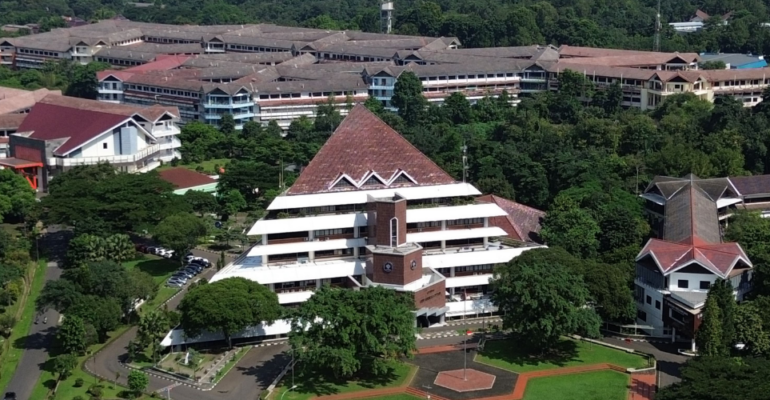
IPB University has issued a new policy regarding adjustments to work patterns and the conduct of academic activities on campus. Through Rector’s Circular Letter No. 15283/IT3/KP.00/2026, IPB University introduced a flexible work scheme or work from home (WFH) for employees as well as an expansion of hybrid learning methods for students, effective immediately upon issuance.
IPB University Rector, Dr Alim Setiawan Slamet, stated that this step was taken in response to directives from the Minister of State Apparatus Empowerment and Bureaucratic Reform (PANRB) and the Minister of Higher Education, Science, and Technology (Mendiktisaintek) regarding the acceleration of government governance transformation.
“This policy is intended to improve the efficiency of mobility and the digitization of services without compromising the effectiveness of task execution, functions, and service quality, while also maintaining the quality and learning outcomes,” said Dr Alim.
In the Circular Letter, IPB University established five adjustment points to ensure organizational effectiveness is maintained amidst the digitization of services.
- Work Pattern Adjustments
Employees are now implementing a hybrid work pattern: 4 days working at the office (work from office/WFO) and 1 day working from home (WFH). For faculties/schools, WFH is implemented on Mondays or Fridays, while for the Rector’s Office, it is on Fridays. The WFH policy does not apply to employees responsible for a) health services, b) campus security, c) information systems, d) facility and infrastructure cleaning, e) the Integrated Service Center (ISC), f) the library, g) research in laboratories or similar activities that cannot be stopped, postponed, or paused, and h) other activities deemed critically important and non-postponable by management. Although flexible, department heads are required to set clear output targets and monitor and supervise the achievement of the specified targets and objectives.
- Adjustments to Academic Activities
IPB University allows Deans the flexibility to adjust classes according to the characteristics and readiness of each study program. One such method is hybrid learning through a proportional mix of online learning, particularly for students in their 5th semester and above, as well as graduate programs. However, activities requiring practical training, laboratory work, studio sessions, clinical work, or fieldwork must still be conducted in person.
- Optimization of Digital Services
These regulations also govern the optimization of digital platforms for various needs, ranging from coordination meetings, student services, and thesis guidance to committee examinations. This aims to facilitate access to services while reducing unnecessary physical mobility.
- Mobility Efficiency
IPB University has established measures to improve the efficiency of official travel, with reductions of up to 50% for domestic travel and 70% for international travel. Official travel is conducted selectively, limited to trips that are essential and strategic, and whenever possible, conducted remotely. This policy also restricts the use of official vehicles and encourages the entire university community to use public transportation.
- Monitoring and Evaluation
Monitoring and Evaluation (Monev) will be conducted periodically to ensure the effectiveness of task execution, organizational functions, and service quality, as well as to maintain the quality and learning outcomes of students during the implementation of this policy.
______________________________
Energy Conservation and Plastic Waste Reduction
At the same time, IPB University also issued Circular Letter No. 15249/IT3/TU/M/B/2026 on Energy Conservation and Plastic Waste Reduction. This regulation was established to realize a sustainable campus in line with the National Work Culture Transformation Policy and the Energy Policy outlined in Circular Letter No 2 of 2026 from the Ministry of Education, Culture, Research, and Technology, dated March 31, 2026.
Vice Rector for Resource Resilience and Infrastructure, Dr Heti Mulyati, emphasized that this policy is part of building a green campus culture.
“Energy conservation and plastic waste reduction are not merely administrative policies, but a collective movement to build a sustainable campus culture,” she stated.
Key points of the policy include:
- Electricity Conservation
-
- Lights and electronic devices must be used according to activity schedules and turned off after use
- Outside of academic activities, lighting in workspaces, meeting rooms, and lobbies is limited to a maximum of 50% during working hours, prioritizing natural daylight
- Turn off air conditioners, lights, and other electrical devices during break hours (12.00–13.00 WIB), except for academic rooms/activities or those requiring continuous operation
- Operate air conditioners from 10.00 AM to 4.00 PM with the temperature set between 23–25°C and at no more than 50% of their capacity, except for academic rooms or activities, or those requiring continuous air conditioning
- Optimize the use of stairs for moving between 1–2 floors.
- Operate only one elevator unit on a rotating basis each day for buildings with two elevator units
- Managers of teaching industries/factories, greenhouses, cold storage facilities, and high-power electric motor equipment must ensure optimal efficiency.
- Work units are required to cover electricity bills independently if these facilities are used for income generating purposes
- Clean Water Conservation
-
- Use clean water sparingly and turn off the faucet immediately after use
- Report water pipe leaks to staff through the IPB Help Center.
- Do not use clean water for activities unrelated to academic or office operations
- Fuel Efficiency
-
- Official vehicles are for official business only
- Domestic official travel is conducted selectively and limited to 50%, unless it is highly important, strategic, and cannot be conducted remotely
- Optimize online meetings if physical attendance is not required
- Perform routine and scheduled vehicle maintenance
- Avoid letting the engine idle for too long; do not leave the engine running while stopped (idling) for more than five minutes
- Reducing Plastic Waste
-
- Get into the habit of bringing your own reusable water bottle and personal utensils, while avoiding single-use plastic items (styrofoam, plastic straws, cups, and bottles)
- Bring eco-friendly shopping bags (tote bags, cloth bags, and other reusable bags)
- Sorting waste by type: organic, inorganic, and residual waste
- Reducing paper usage by transitioning to digital communication and documentation systems for academic and administrative activities
- Reporting waste accumulation or damaged waste bins to staff through the IPB Help Center
Regular Monitoring and Evaluation
Dr Heti Mulyati emphasized that all policies will be monitored regularly to ensure their effectiveness.
“Monitoring and evaluation are conducted continuously to ensure efficiency aligns with service quality and campus environmental sustainability,” she said. (IAAS/KQA)