IPB University’s Veterinary Paramedic Program Helps Mulyaharja Farmers Identify Healthy and Sick Sheep
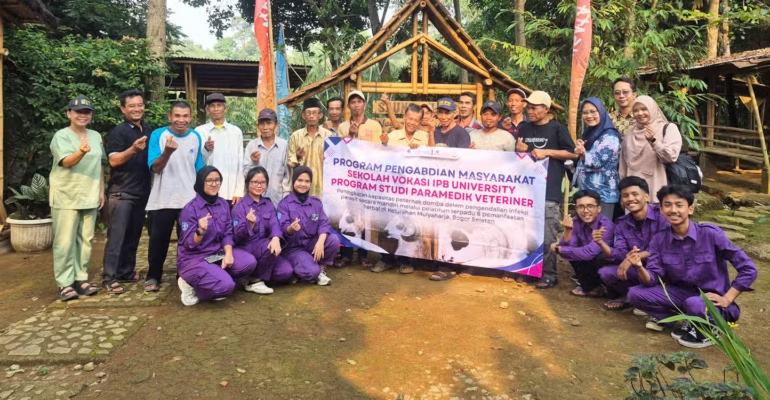
IPB University’s Veterinary Paramedic Program kicked off a series of Centralized and Integrated Community Service Programs (PPM) for the 2026 Vocational School in collaboration with the Alam Jaya Makmur Adult Farmers’ Group (KTD) in Lembur Sawah Village, Mulyaharja Subdistrict, South Bogor, Bogor City, on Wednesday (9/23).
This inaugural event focused on the theme “Enhancing Sheep Farmers’ Capacity in Self Managed Parasitic Infection Control through Integrated Training and the Use of Herbal Remedies.”
PPM Team Leader Dr Tetty Barunawati Siagian, M.Si., stated that this program is an annual initiative of IPB University’s Vocational School to provide guidance and strengthen community capacity based on on the ground needs.
“This year, we are focusing on controlling parasitic infections in sheep and goats. Farmers need to have the basic ability to assess the condition of their livestock, particularly to distinguish between healthy sheep and those showing signs of health issues,” she said.
The Dangers of Parasites in Sheep and Goats
According to drh Tetty, parasites are one of the health issues that can affect livestock productivity. Parasites in sheep and goats can generally be classified into ectoparasites, such as ticks, and endoparasites, such as worms and protozoa.
Parasitic infections can cause livestock to lose nutrients and blood, develop anemia, experience stunted growth, suffer from a decline in physical condition, and have dull looking skin and coats. Under certain conditions, parasitic infestations can also impact livestock productivity and reproduction.
“Therefore, routine monitoring is crucial. Farmers need to observe the animals’ physical condition, activity levels, appetite, feces, skin and coat condition, gait, and behavioral changes on a daily basis,” explained drh Tetty.
Utilization of Herbal Remedies
As part of subsequent PPM activities, the team also introduced the potential use of herbal remedies available in the farmers’ local environment as part of parasite control efforts. This approach was implemented through training and mentoring, with a focus on safety and proper application.
“We hope that farmers can become increasingly self-reliant in preventing parasitic diseases. We will also develop the potential of herbal materials found in the farmers’ surroundings as part of the mentoring program,” she added.
Received with Enthusiasm
Ahmad Jaelani, Chair of the Alam Jaya Makmur Sheep Farmers’ Group (KTD), welcomed the implementation of the program. According to him, this marks a new experience for the farmers’ group as it is the first activity organized by IPB’s Vocational School specifically conducted with sheep farmers at KTD Alam Jaya Makmur.
“We hope the program can continue because there is much for farmers to learn, particularly regarding sheep health and disease prevention,” he said.
The farmers’ enthusiasm was evident throughout the event. They actively participated in discussions and posed various questions to the faculty team from the Veterinary Paramedic Program regarding sheep health, signs of parasitic infections, and preventive measures that can be implemented at the farm level.
During the discussion session, the PPM team also listened firsthand to the experiences and challenges faced by the farmers. The results of these discussions will serve as the basis for the team in designing future training and mentoring activities to better meet the community’s needs.
Through this collaboration, the Veterinary Paramedic Study Program aims to promote the application of appropriate animal health practices to support healthier, more productive, and sustainable sheep and goat populations at the smallholder farm level. (*/Rz)