IPB University’s LPA2I and Himasita Promote Biointensive Integrated Pest Management for Red Onions Shallots
The Institute for Agromaritime Development and Innopreneurship Acceleration (LPA2I) at IPB University is promoting the strengthening of effective, efficient, and sustainable plant protection strategies through the implementation of biointensive integrated pest management (PHT).
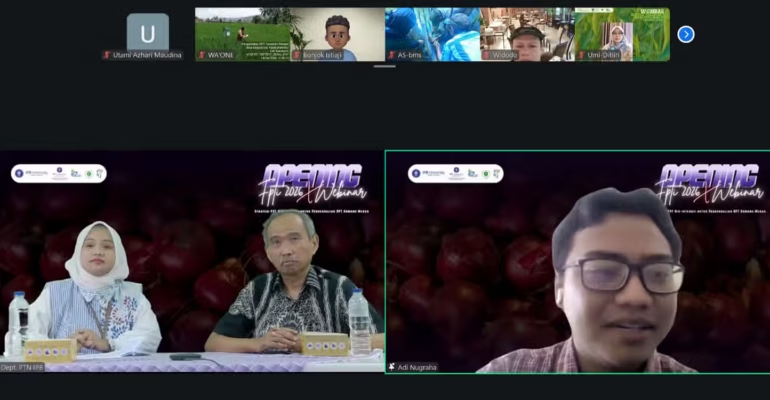
This effort was realized through a collaboration with the IPB University Plant Protection Student Association (Himasita) during the Opening of the 2026 Indonesian Plant Protection Festival (FPTI) × Plant Doctor Webinar Series #5, held on Saturday (9/12).
With the theme “Biointensive IPM Strategies for Controlling Pests in Shallots,” this event served as a forum for discussion that brought together academic perspectives and practical experience in addressing the challenges of managing plant pests in the red onion sector.
Bonjok Istiaji, SP, MSi, Assistant for Farmer and Fisherman Development at LPA2I, noted that red onions are a strategic commodity with significant economic value for Indonesia. However, the productivity and efficiency of red onion cultivation still face various challenges, one of which is the high cost of pest and disease control.
According to Bonjok, the ever evolving dynamics of plant pests and diseases require a management approach that is not only focused on control when an infestation occurs but also takes into account plant health and overall environmental conditions.
“We hope that biointensive agriculture or cultivation techniques will be one of the solutions, and we will continue to develop them,” said Bonjok during a webinar attended by approximately 680 participants via Zoom Meeting and a live YouTube stream.
Prof Suryo Wiyono, a full professor in the Department of Plant Protection at IPB University, provided an academic perspective. He explained that the implementation of integrated pest management (PHT) must begin with the management of the cropping ecosystem, including through the regulation of cropping patterns and environmental conditions, rather than only after a pest outbreak occurs.
One of the strategies discussed was crop rotation as a means to disrupt the life cycle of pests. “Crop rotation affects almost all pests, except for viruses,” explained Prof Suryo.
He also explained that the development of plant diseases is influenced by the interaction between host plants, pathogens, and the environment. Therefore, these three factors must be taken into account when determining pest management strategies.
Adi Nugraha, SP, MSi, shared a field perspective, discussing his experience with shallot cultivation, the dynamics of the growing season, pest and disease conditions, and the challenges faced by farmers. According to Adi, economic value is one of the factors that makes shallots an attractive crop to grow. “Even when yields decline, this commodity still offers the opportunity to be stored and marketed later,” he said.
Meanwhile, the Chairman of the Department of Plant Protection at IPB University, Dr Giyanto, MSi, commended the students’ consistency in creating educational opportunities in the field of plant protection. Initiatives such as the Plant Doctor Series can expand access for communities across Indonesia to information and knowledge about plant protection.
The Chair of FPTI 2026, Dimas Erwin, stated that this collaboration is part of an effort to provide relevant and practical plant protection education. FPTI 2026 is expected to not only serve as a platform for sharing knowledge but also to strengthen collaboration among students, academics, practitioners, and the community.
This synergy is expected to support the development of more effective, adaptive, environmentally friendly, and sustainable plant protection strategies for Indonesian agriculture. (*/Rz) (IAAS/HNY)